
FAKOLY
Fakoly Doumbia is a legendary figure in the oral traditions of the Malinke people, renowned for his role in the conflict between Sundiata Keita and Soumaoro Kanté (also known as Sumaworo Kanté or Sumanguru Kanté). Soumaoro Kante, the blacksmith king of the Sosso Kingdom in the 13th century, was Sundiata’s adversary before the rise of the Mali Empire (also known historically as the Manding Empire, due to the Mandinka – also called Malinke – ethnic group’s prominence within the empire).
Fakoly Doumbia, though not consistently depicted as a nephew of Soumaoro Kante in all versions of the epic, joined ranks with Sundiata and a coalition of smaller kingdoms to defeat Soumaoro Kante. He is commonly portrayed as a key ally of Sundiata Keita and celebrated as both a military leader and a spiritual figure, revered for his bravery, strategic prowess, and reputed magical abilities.
The epic tale of Sundiata recounts the rivalry between Sundiata and Soumaoro, culminating in the pivotal Battle of Kirina in 1235. Sundiata’s victory over Soumaoro marked the establishment of the Mali Empire, one of the most powerful, wealthy and influential empires, which would control most of West Africa for the next two centuries.
Read more
Fakoly is depicted as the most powerful sorcerer and traditional healer, known as a ‘féticheur’ in French. Féticheurs possess spiritual knowledge and abilities to communicate with spirits, perform rituals, and provide healing and guidance to their communities using fetishes, charms, and other spiritual objects.
Associated with the Kourouma clan, one of the prominent clans among the Malinke people, Fakoly is deeply rooted in Malinke cultural and spiritual traditions.
BASSITI
Among the Malinké of Upper Guinea, Bassiti are sorcerers and traditional healers—known in French as “féticheurs”.
Bassiti possess deep spiritual knowledge and the ability to communicate with spirits—both ancestral and tutelary. They perform rituals, provide physical and spiritual healing, and offer guidance to their communities. They are also the guardians of sacred places such as ponds, forests, and ancestral groves.
They work with herbal remedies, ritual objects (amulets, fetishes, staffs, and other sacred instruments), and ceremonies intended to protect the community from harmful entities—whether malevolent spirits or wicked sorcerers.
Bassiti occupy an ambivalent position in Malinké society: they are respected for their protective and healing powers, yet sometimes feared or stigmatized, suspected of witchcraft or of wielding political and social influence through occult means.
During public celebrations—such as processions to sacred ponds, great mask festivals, or Dununba festivals—Bassiti take part to bless the gathering, summon the spirits, and ensure the ritual purity of the site. They are believed to detect malevolent individuals, whom they symbolically strike and drive away from the assembled crowd.
Each “féticheur” has his own rhythm and ceremony, usually performed late at night. Among the principal ritual masks are Djina Mansa, Kawa, Koma, Nama, Nyaba, Soliwulen, Woïma, and Wulujeng.
Among them, Koma is regarded as “the greatest”, “the master of fetishes”—the most powerful of all.
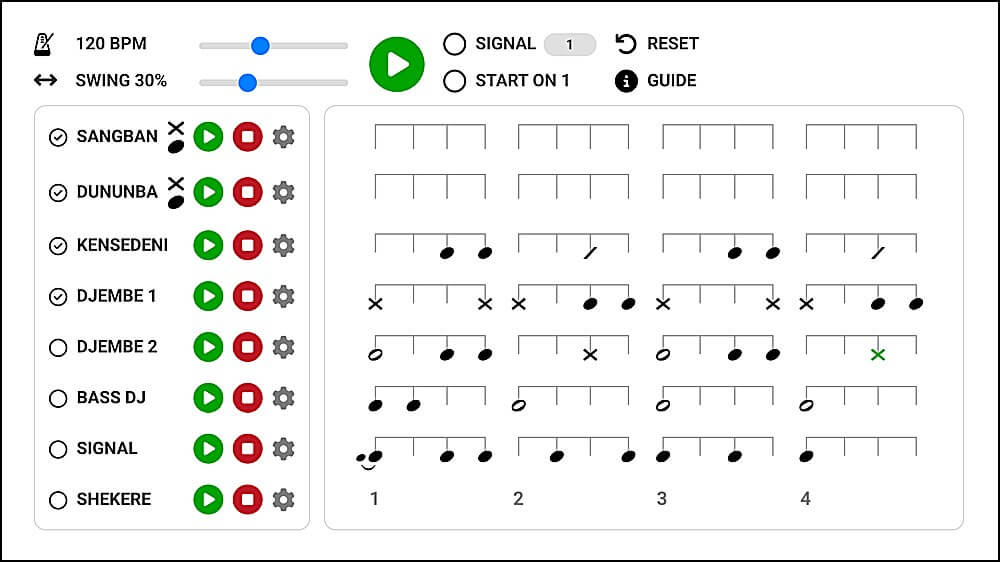
BASIC PATTERNS
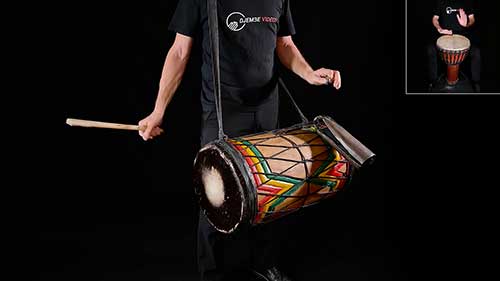
Sangban (2)
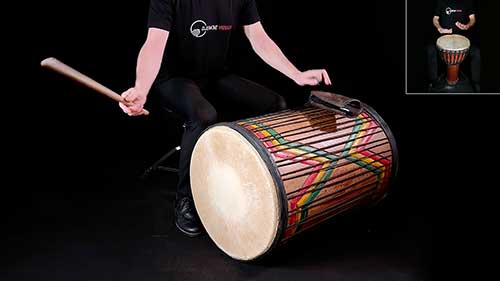
Dununba
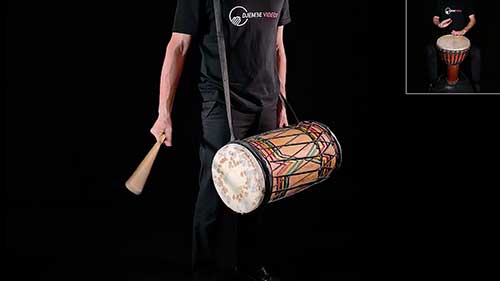
Kensedeni
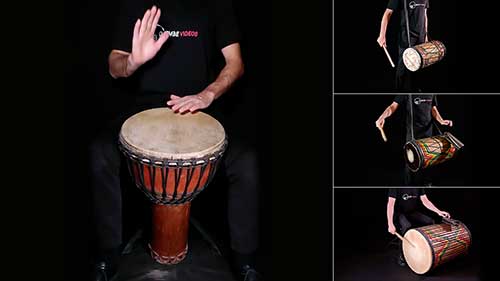
Djembé (3)
LOOPS
VARIATIONS
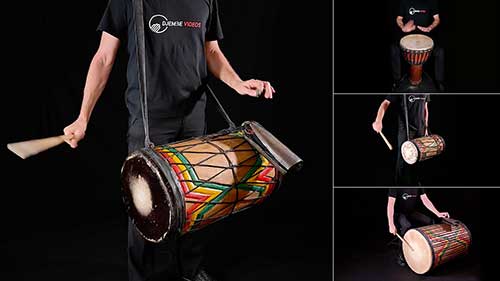
Sangban (18)
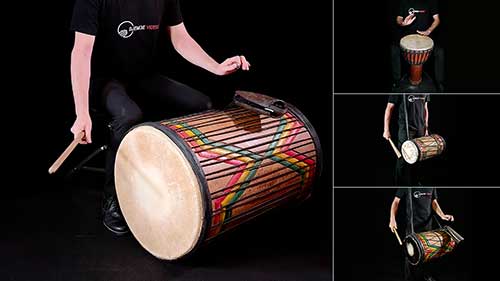
Dununba (62)
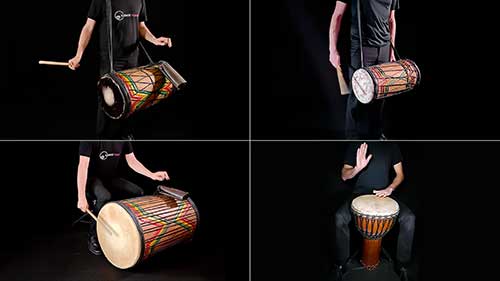
Sangban/Dununba (1)
CHAUFFES
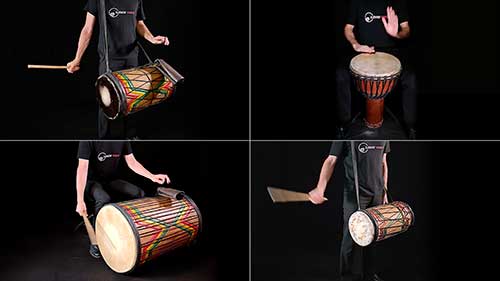
Dununs (3)
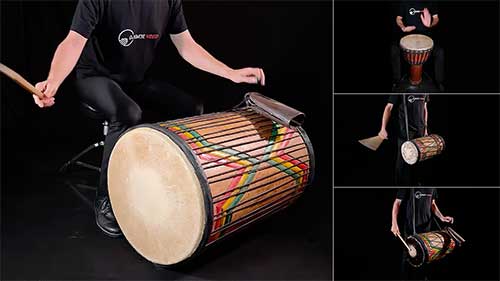
Dununba (2)
DJEMBE SOLOS
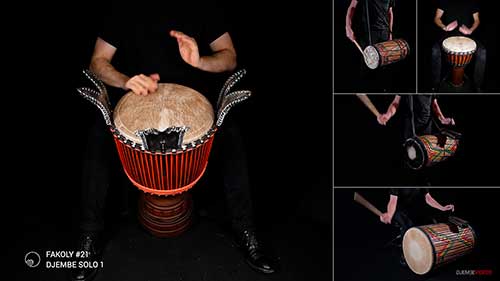
Level 1 (2)
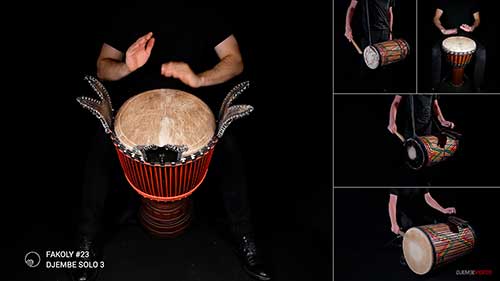
Level 2 (2)