
MORIBAYASSA
According to oral tradition, the name Moribayassa comes from a mythical couple from the village of Warabugu in Mali: Moriba and Yassa, the embodiment of perfect love, mutual respect, and marital harmony. After their death, their grave became a place of pilgrimage where people came to ask for blessings: a successful marriage, healing, fertility, the return of a loved one, or the resolution of deep personal suffering.
Another linguistic interpretation explains that Mori means « féticheur » (French for spiritual healer), Ba means great, and Yassa refers to the dance. Moribayassa would therefore mean “the dance of the great spiritual healer.”
Very ancient and present among both the Malinke and Bambara peoples, the Moribayassa rhythm was originally played exclusively to accompany a female ritual dance, performed only in exceptional life circumstances.
Read more
Moribayassa is inseparable from a solemn vow made to the spirit Moribayassa. When a woman goes through an extreme ordeal—such as prolonged infertility, serious illness, loss, or deep despair—and no other solution seems possible, she may make the following promise: “If my misfortune comes to an end, I will dance the Moribayassa.”
This vow may be made only once in a lifetime. When the request is fulfilled—sometimes after many years—the woman is obligated to perform the dance. Failing to honor this commitment is considered a serious imbalance that may cancel the blessing received.
On the appointed day, the woman deliberately dresses in rags, in an eccentric and unsettling manner: torn clothes, garments worn inside out, men’s clothing, unusual objects tied to the body, outfits made from ripped jute sacks, uncombed or deliberately messy hair, and so on. She may also style herself and apply makeup in a deliberately “crazy” way. This appearance symbolizes a break from her former state, past suffering, and total liberation.
Accompanied by one or more musicians—or, when no instruments are available, by women creating rhythm with jerrycans, calabashes, pots, or other everyday utensils—she moves through the village singing and dancing, followed by women and a crowd of children who respond in chorus to the refrain: “Moribayassa hé, Moribayassa…”
The dance may last for several hours and, depending on the region, may involve circling the village multiple times. The movements emphasize the lower body, especially the hips and legs.
The key moment of the ritual occurs when the group reaches the outskirts of the village—often near a sacred mango tree, sometimes itself called Moribayassa. There, the woman removes her rags: they are buried, abandoned, or burned, symbolically marking the end of misfortune. She then puts on clean clothes and returns home, often running, without speaking to anyone. It is believed that if someone in the accompanying group falls behind during the return run, they may encounter misfortune themselves—hence the urgency with which everyone rushes back.
Sometimes referred to as “the rhythm of madness”, Moribayassa is in fact the rhythm of renewed hope and gratitude after hardship. The “madness” does not represent loss of control, but rather an overflow of joy—an extreme expression of long-contained relief. During the dance, the woman is allowed to break social taboos, to expose herself, and to fully release. Moribayassa is also a rite of humility. It reminds us that regardless of wealth or social status, human destiny depends on forces greater than ourselves. Poor and rich, nobles and commoners are placed on equal footing before the mystery of life.
BASIC PATTERNS
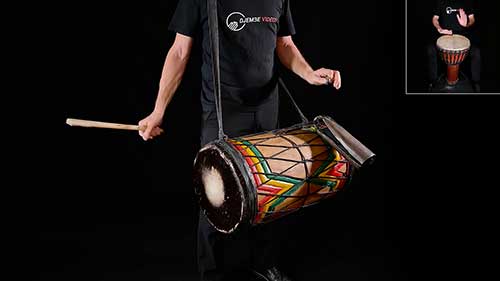
Sangban (5)
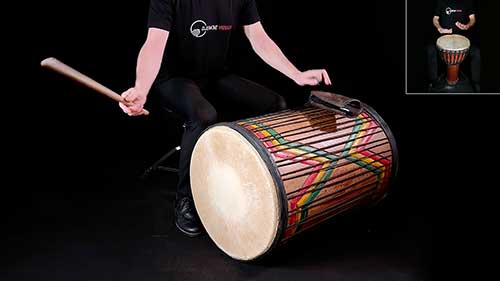
Dununba (9)
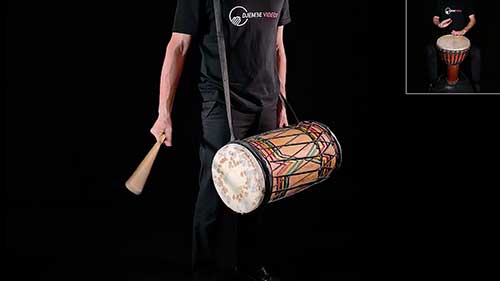
Kensedeni (5)
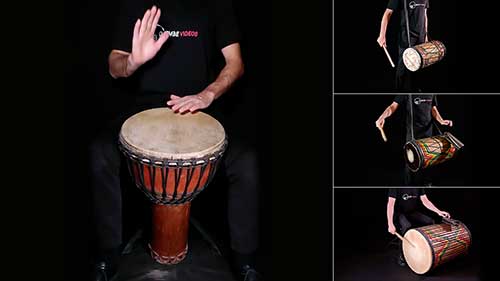
Djembe (3)
LOOPS
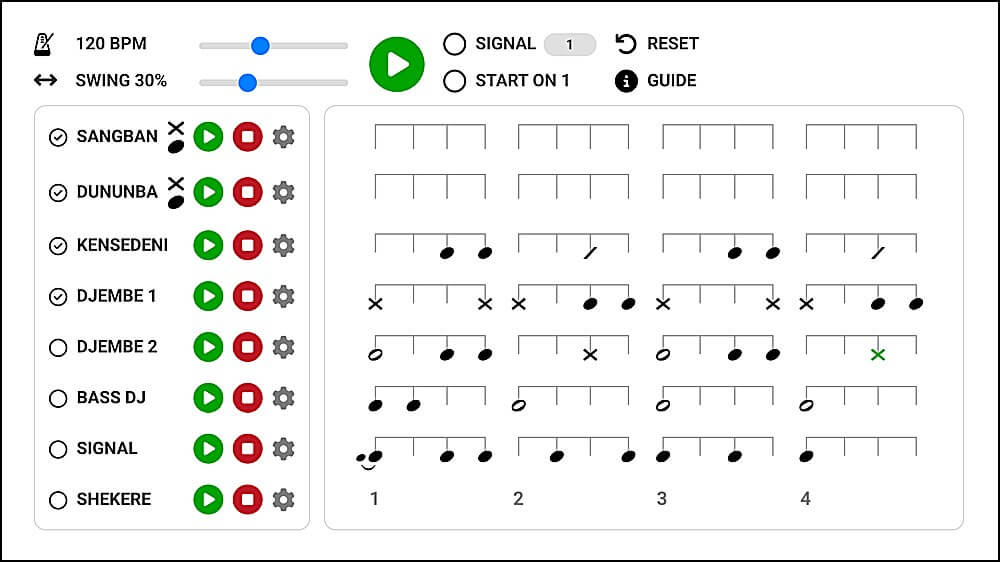
VARIATIONS
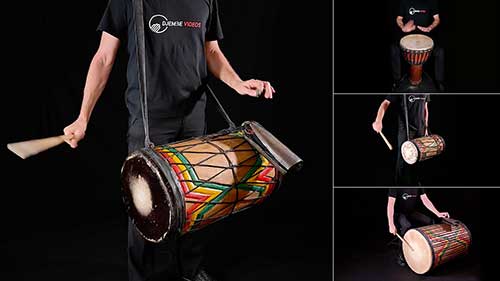
Sangban (29)
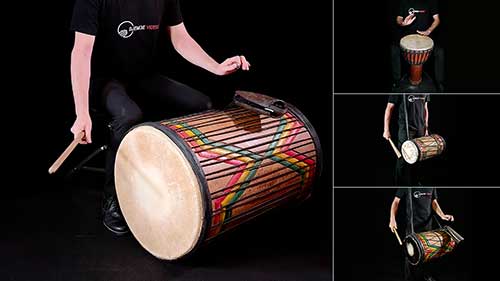
Dununba (30)
CHAUFFES
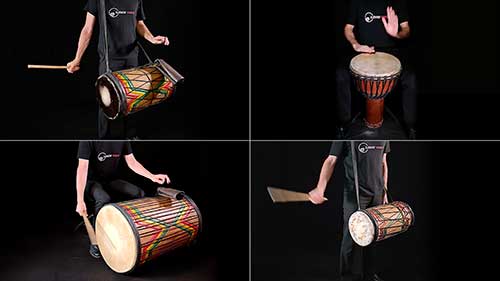
Dununs (6)
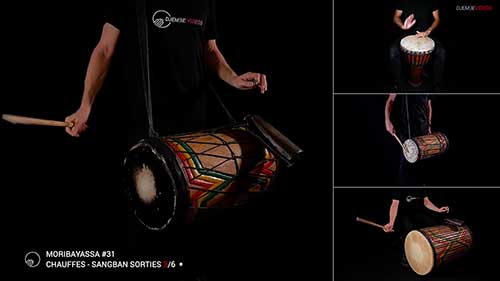
Sorties (6)
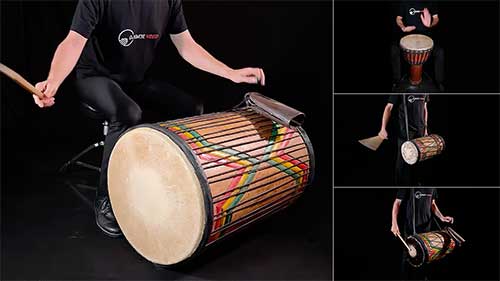
Dununba (6)