
SOLIBA
The day before the circumcision, from late afternoon and throughout the night, the Soliba rhythm is played. This stage is called Solibasi. Early in the morning, the children are brought to be circumcised. The moment after the circumcision is called Fadi Fadi, meaning that the children “have succeeded”. The clothes they wore are passed down to future generations.
SOLI
The word Soli refers to the circumcision ceremony. Soli (A) and Soliba are the most globally popular of all the Soli rhythms, but there are many more.
If the rice harvest is good, there is enough money to finance the entire organization, and a certain star (the star of happiness) appears in the sky, a Soliba (Ba means ‘great’) can be organized. Otherwise, the celebration is limited to a Soli, a smaller event among the villagers, held on the evening before the circumcision day.
Read more
The Soliba circumcision festival, is the longest celebration of Malinke culture and last for three weeks. It consists of different stages, corresponding to specific rhythms and tasks.
For one to three years, families of the children that will be circumcised prepare by gathering the necessary resources for the three-month celebration. They grow cassava, rice and other staples in preparation to have enough food to feed all the children and their caregivers throughout the festival.
In the past, children were prepared for this practice when they were mature, strong and sufficiently ready for adult life. Puberty, specifically the appearance hair on the face at the age of 15-17 was the signal to start the initiation. Today circumcision takes place at 5-7 years of age.
Below are the different steps of a Soliba:
1. Sökö, the announcement of the Bilakoro to their uncles (cf. Sökö)
2. Marabonassi, education and initiation of bilakoro:
Marabon is the house in which the children will live in for about a month. The N’yatike, educators of the Bilakoro, are the leaders. Each child is assisted in his domestic duties by a companion or family. Although there are no emotional relationships in this context, sometimes these “couples” get married once all the stages of the ceremony are completed.
During this stage, the Bilakoro carry out various tasks related to their transition from childhood to adult status, such as searching for wood to light, cook, heat water for washing. This wood will also be used during the last stage called Dankun.
Once a week, the Bilakoro tour the village dancing among others Kankanba, Duwa (rhythm representing the Condé family in the Sankaran), Sökö, before retiring again in the Marabon.
3. Solissi – The Soli Ceremony:
At the end of the retreat, the Soli ceremony is held for two to four days (formerly it was a week). Music, drums, songs and flutes are heard continuously throughout the village, only interrupted by the need to eat or pray. The locals gradually join the celebrations by dancing. Bilakoro make a daily tour to the village to greet the families, always dancing Kankanba, Duwa or Sökö.
The village welcome and celebrate the uncles by playing the rhythm Sökö with each family having prepared enough food to accommodate everyone.
On the final night of the celebrations, different versions of the Soli rhythm are played and danced in an uninterrupted round.
The day before the circumcision the rhythm Kala is played announcing the next crucial step. Each child must then hold a tool representing the work of their fathers.
Next we hear the secret rhythm Do Foli which is played to accompany the children saying their goodbyes to their mothers and other family members as very early the following day they will be taken to the Dankun for a period of around a week.
The musicians who accompany the ceremony are hired by the families, for an offering of ten cola nuts and a little money.
During the Solissi, you can hear the rhythms Bakutuna, Sökö, Sökö Bambulan, Kankanba, Duwa, Soli, Soliba, Kadan, Bilakoro Dunun, or Kala, amongst others.
4. Dankun, the stage of circumcision:
At the time of the circumcision, the whole village remains on the bara (the village square) dancing and celebrating. The Kawa mask can be invited, to protect the children and the village at this very important stage.
The Dankun is a secret place approximately a kilometer from the village, where only the children and those who care for them are allowed. The Bilakoro live there in a house called a Fafa, in which the circumcision will take place. The wood collected during the Marabonassi is also burned there. The person performing the circumcision is named Biri Djeli. He has mastered the knowledge necessary for such an important, decisive and potentially fatal task in the lives of children.
Throughout the week, the group remains inside the Dankun, receiving the necessary aftercare following circumcision. Traditional songs are accompanied by an instrument called Wassamba, and stories are taught.
On the last day, the group of children are taken to the river in the morning, where they can wash themselves and their clothes. They can return to their families on the day called Kola Kady, a great reunion party filled with happiness and joy.
A Bilakoro thus becomes Kambere (young man).
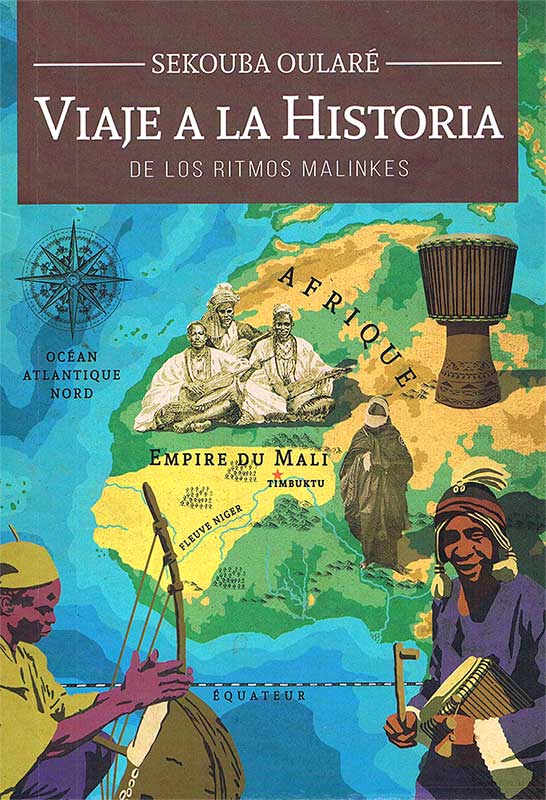
Most of this information was told to Jeremy Tomasck by Sekouba Oularé during many conversations. You can find more details in his book “Viaje a la historia de los ritmos malinkes” (Sube La Marea editions, 2022).
BASIC PATTERNS
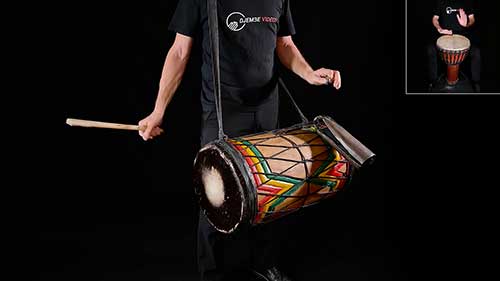
Sangban
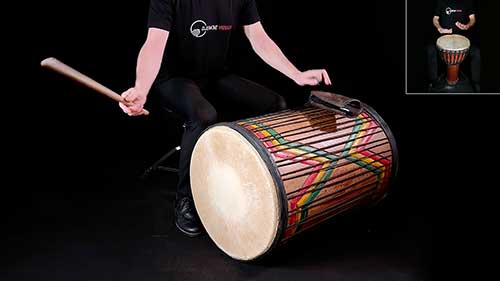
Dununba (5)
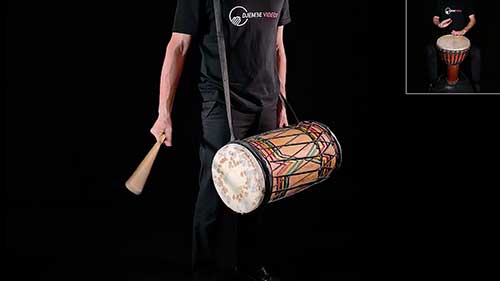
Kensedeni
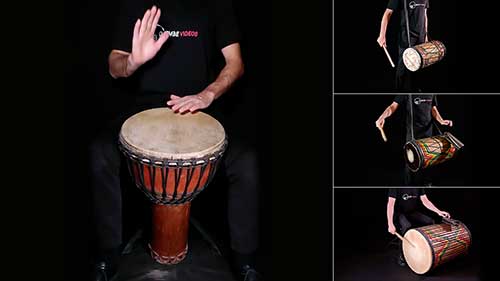
Djembé (3)
VARIATIONS
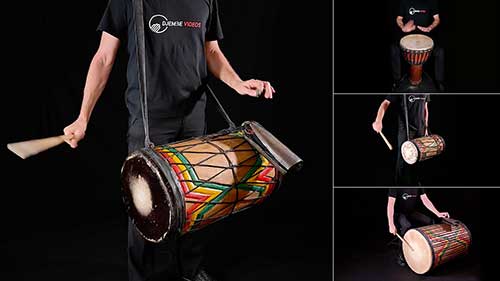
Sangban (84)
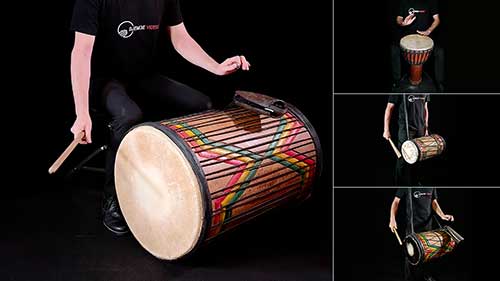
Dununba (66)
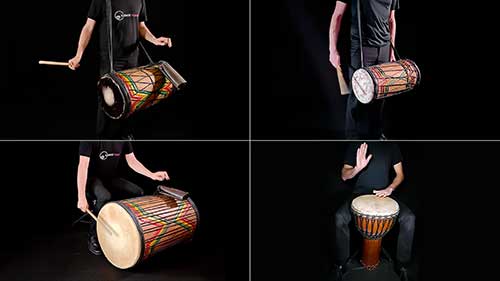
Sangban/Dununba (7)
CHAUFFES
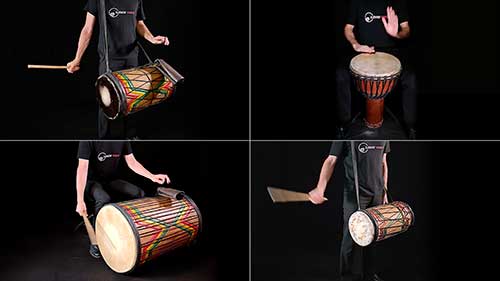
Dununs (11)
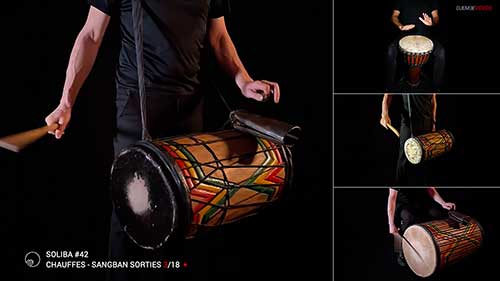
Sangban sorties (19)
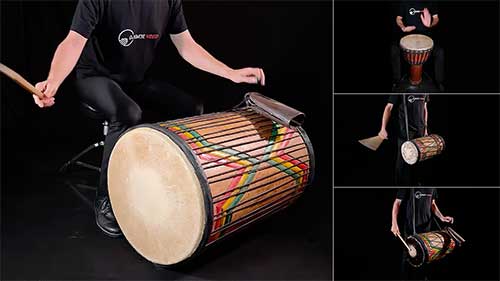
Dununba (8)
DJEMBE SOLOS
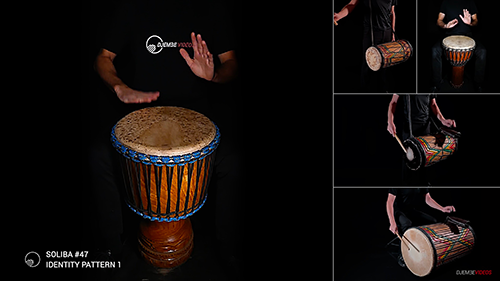
Identity patterns (2)

Beginner (1)
BONUS
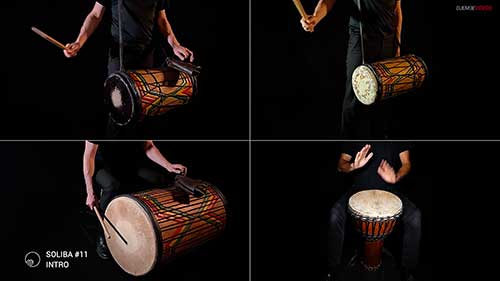
Intro (1)