
DEN (MENDIANI)
The rhythm group Den, or Mendiani, is from the Sankaran area of Upper Guinea and comes from the Malinke ethnic group.
The word Mendiani consists of the words Min, meaning “where” and Diani which means “rich”. Mendia refers to a loved person and ni is a diminutive. In basic terms the word Mendiani refers to a party. A party where “it is rich”.
The Mendiani are also known as a collective of girls who are taken care of by the community. Aged between 6 and 14, they are agile, courageous and are all virgins.
Most villages in the Kouroussa region have two or three Mendiani dancers, also called Bundiani, and one Lafè. The word Bundia is used in Malinke to refer to a baby or doll, something very precious that requires affection and care which is loved by all.
Read more
Ahead of Mendiani celebrations, the girls are prepared by the elder Mendiani who know the secrets of the rituals.
The Lafè, “the girl next door”, refers to the second, or even third, which may seem less important but in fact still has its own dedicated rhythm. During the ritual, she is in charge of the communication between the Mendiani and the crowd. sometimes the Lafè may no longer wish to play this role, which is generally not well received.
The wife of the village chief and the former Mendiani are responsible for the organisation of the festival, which occurs during the transition from the dry season into that of the rainy season. This is when the Dalamo (cf Kon) is celebrated marking the end of Ramadan, Tabaski, or during visits from important dignitaries.
At the beginning of the ceremony, the Waraba (Wara means “tiger” and Ba means “great”) carry the girls on their shoulders to the Bara, the central square of the village. During this display the percussionists play the Lafè rhythm, also called Denabendunun, Waraba or Denadon.
The Lafé dances around the bearers of the girls, holding in each hand a Kalama which is a large calabash covered with shells (cowries) used as a shaker.
The girls are sometimes adorned with a “boubou” (a traditional costume) and mask which they remove when the musicians change to the Den rhythm. At this moment, the men put the girls on the ground and they start dancing.
The next part of the celebration is faster, with the percussionists playing the rhythm Manamba (also called Bundiani or Daba depending on the region).
Den is also sometimes referred to as Dentolon (Den = child / Tolon = game), literally meaning “children’s game.”
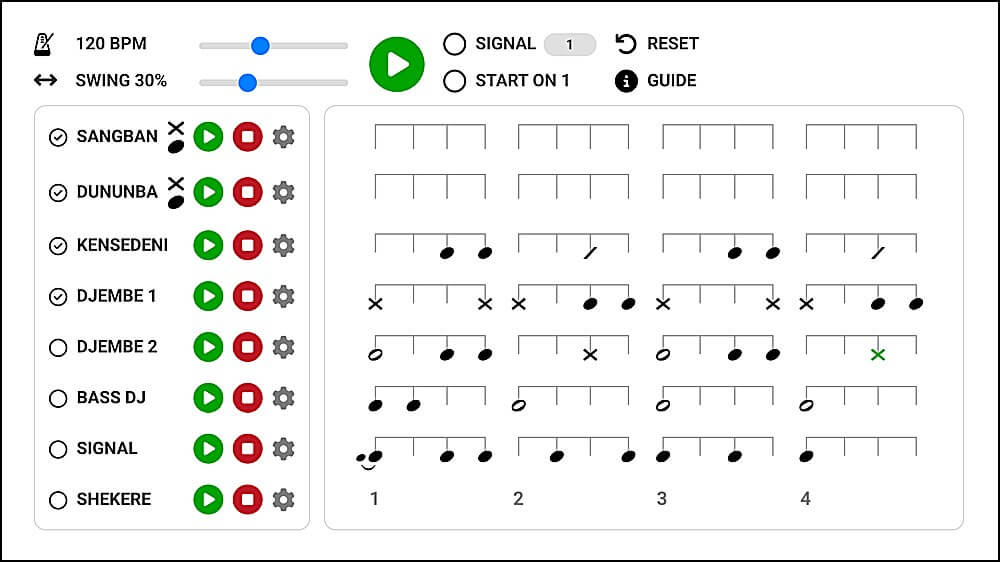
BASIC PATTERNS
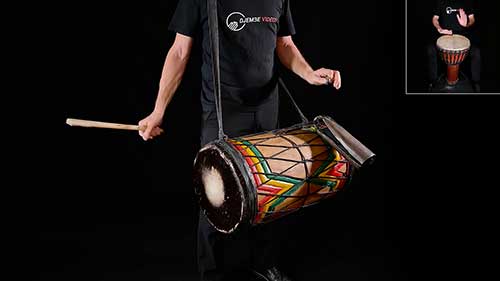
Sangban
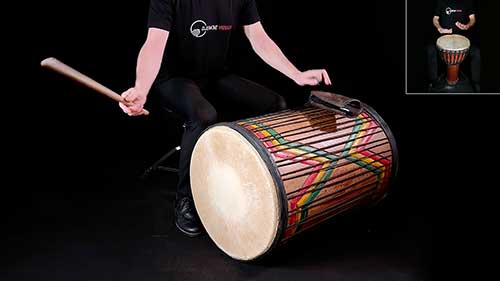
Dununba
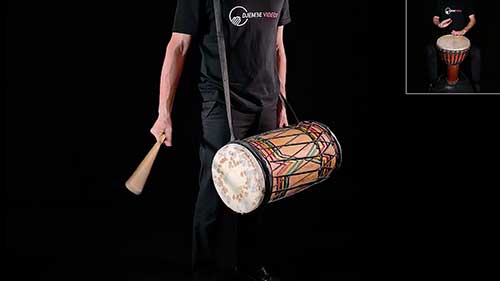
Kensedeni
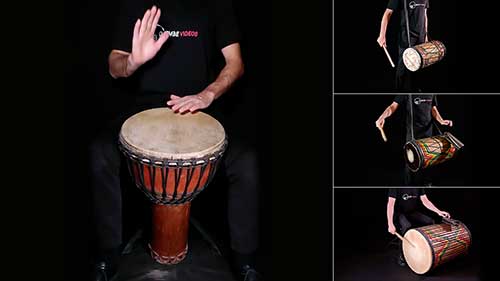
Djembé (3)
LOOPS
VARIATIONS
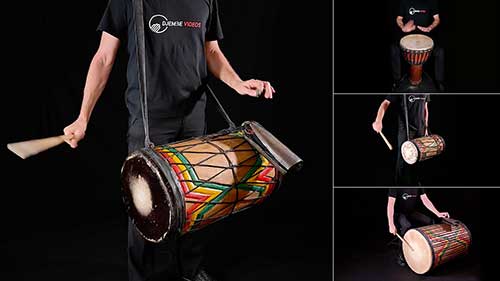
Sangban (48)
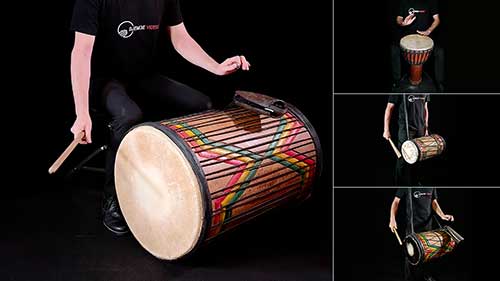
Dununba (76)
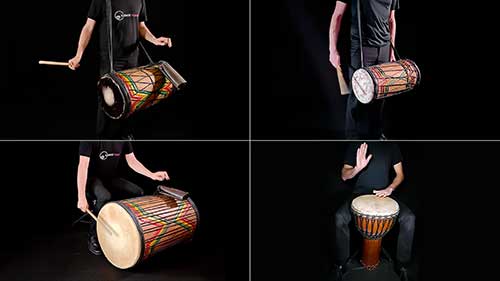
Sangban/Dununba (6)
CHAUFFES
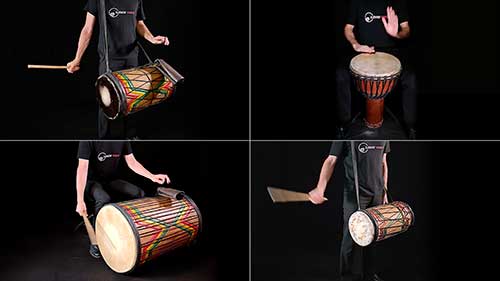
Dununs (12)
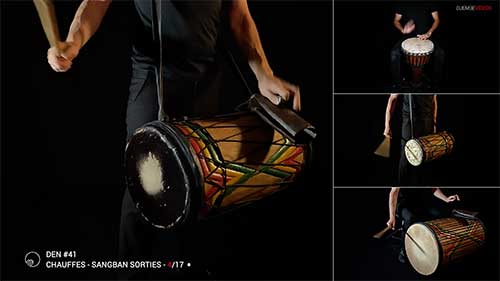
Sangban sorties (17)
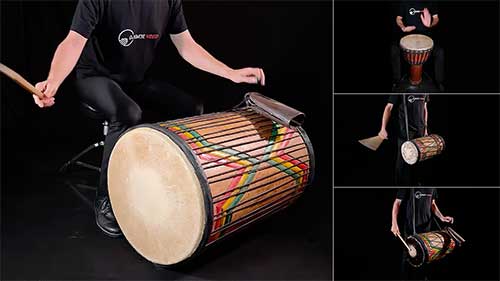
Dununba (7)
DJEMBE SOLOS
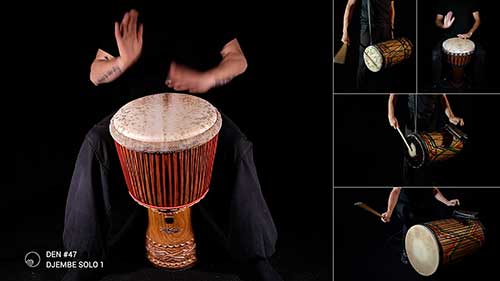
Level 1 (2)
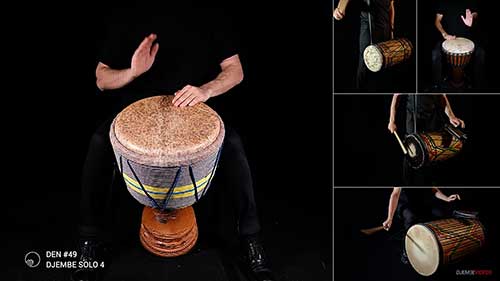
Level 2 (3)
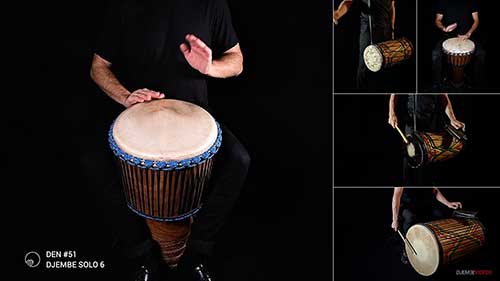
Level 3 (4)