
BALANI
Balani means “porcupine” in Malinke. It belongs to the Konden group of rhythms.
As we know, there are two or three masks. The big one is Konden. The middle one is the Balani and the little one is the Tourani Gbanan (or Tourani Balani).
At some moment, when the mask Konden comes out to dance, the drummers may change to the rhythm of Balani if he appears.
Another name for it however is Bolokodoni which means “cut off limbs”. This is because the Balani mask performs some magic on the Konden mask so that he can’t walk. He stumbles around using a walking stick until the Tourani Gbanan helps him to overcome the Balani‘s power and dance again, at which point the drummers return to Konden.
Read more
KONDEN
Among the Malinké of Guinea, Konden is a mask, unrelated to any specific initiation society. It is part of a coherent set of three masks, the other two being Balanen and Tourani Balanen (or Tourani Gbanan), mainly present in the Hamanah and Gberedu regions in Upper Guinea. They appear to close the main annual festivals (Sunkaro Sali, Tabaski, Gbalan La, Baradosa and Dalahmon), and are entrusted to the custody of the Konden Ba, the fourth generation of young people.
Below are the different generations in the Hamanah/Gberedu region:
1 – Barati
2 – Baradömö (or Baramakono)
3 – Baramamare
4 – Kondenba
5 – Kondenden and Kondendömö
6 – Timbaraba and Konkoson
7 – Nanfadimani
8 – Sulukuni
Konden is a very special mask, made of wood enhanced with metal plates (usually tinplate or aluminum), with three to six pairs of eyes.
The dancer places his head inside the mask and maintains it by passing his fingers through a hole located at chin level. In his other hand, he holds a leafy branch acting as a whip.
Entirely dressed in raffia, completely concealing any recognizable detail, no one can know who the Konden is, it is a secret. The Konden’s job is to guard the village during the celebrations. He walks and dances quickly, running after the boys to whip them, without any real violence.
His terrifying appearance and his whip frighten children. Parents use this fear throughout the year, not failing to warn them: “The Konden will come looking for you if you are not good!” . In short, the Konden is a bogeyman.
If during the dance pieces of raffia come off and fall to the ground, they are considered talismans for those who pick them up.
When the Konden rhythm is played during a Dununba festival, it is named after Janfani Doni.
In the village of Sangbarala, the Konden and Balanen masks are never present at the same time, and there is no Touranen Gbanan. After the Konden rhythm, if the Balanen comes to dance, the Konden leaves the celebration. Unlike the Konden, the Balanen is not sacred, but it initiates the children.
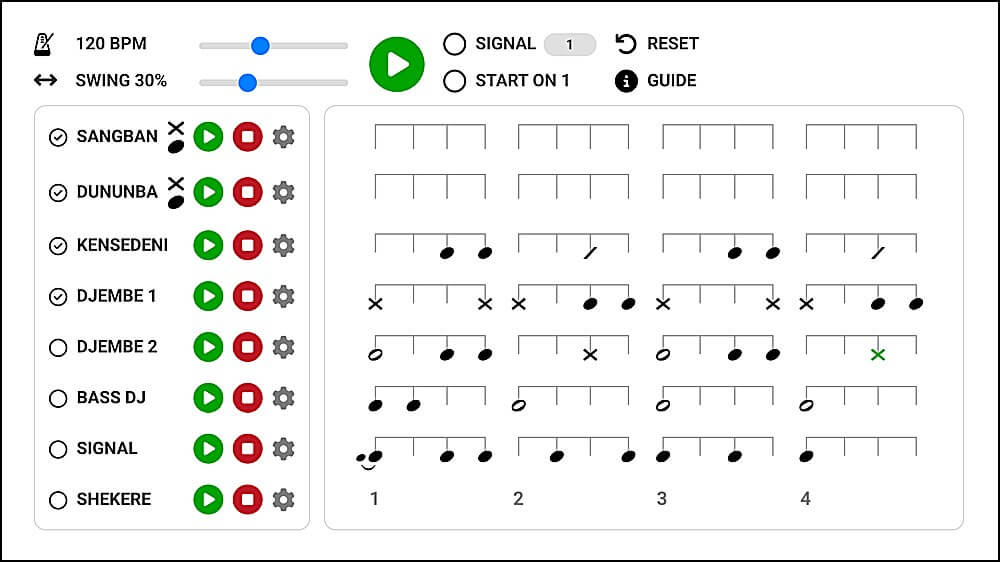
BASIC PATTERNS
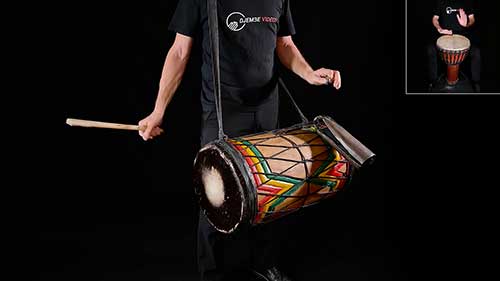
Sangban
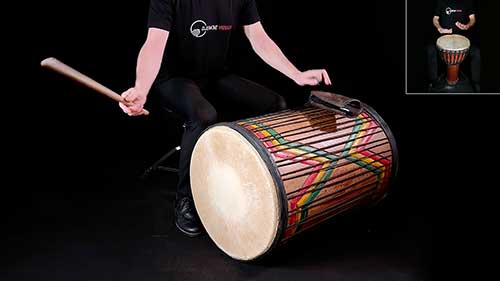
Dununba (6)
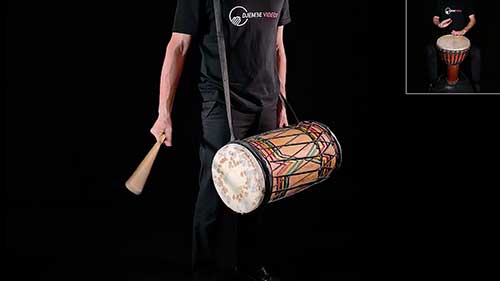
Kensedeni (2)
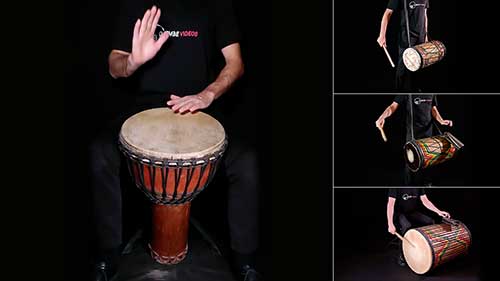
Djembe (3)
LOOPS
VARIATIONS
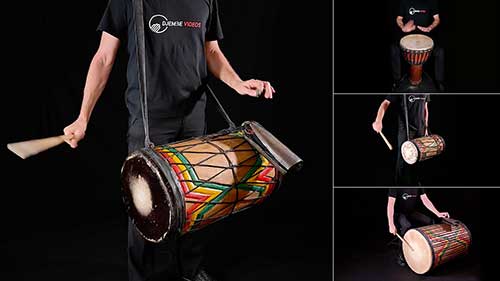
Sangban (11)
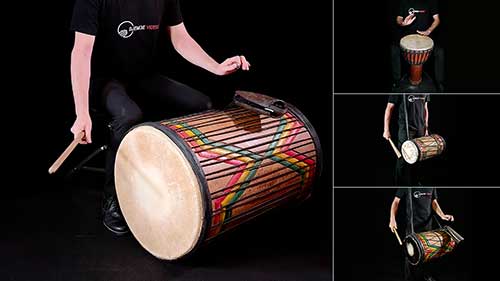
Dununba (12)
CHAUFFES
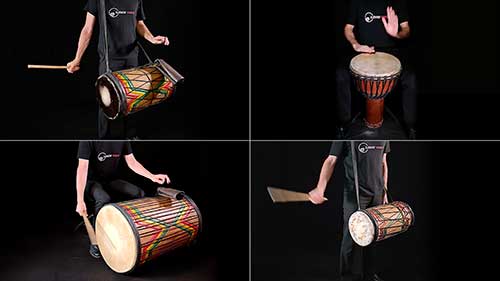
Dununs
DJEMBE SOLOS
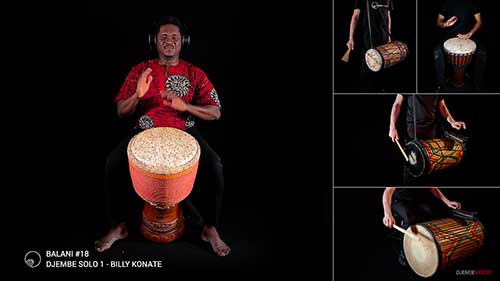
Level 1
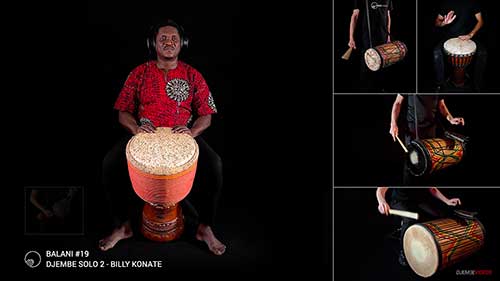
Level 2
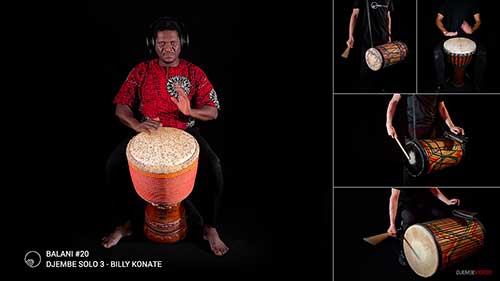
Level 3 (2)