
KOLON
Kolon means “mortar” in Malinke.
This rhythm is played during Dya celebrations. It is a moment of festivity during which girls perform various dance steps around an overturned mortar placed on the ground, notably by taking turns stepping or jumping over it with their legs.
Kolon is sometimes also called Kolon Kalan or Kolonyagban.
DYA
Dya is a group of rhythms native to the Malinke ethnic group. It originated in Kankan before traveling to the regions of Kouroussa, and then Faranah.
Read more
Dya rhythms come from the game Dyalo, in which girls and boys meet at the full moon singing, clapping hands, dancing and jumping with a scarf.
Dya means “row”. During the game girls and boys kneel in rows and play to get acquainted and seduced by one another.
A row of girls and another of boys face each other and play to place a scarf around the neck of the person they love. If the attraction is mutual, the scarf will be kept. If not, it will be placed on someone else’s neck.
Percussion instruments appear at the Dyalagban, a party during which a bride about to marry invites her friends to celebrate and play together before losing her celibacy. This is the final Dya ceremony for the bride-to-be.
Lagban means “jump”. In this party, girls play by briefly approaching each other before suddenly turning to find their place in the row.
Dya parties are therefore intended for single girls and boys, serving as a meeting place.
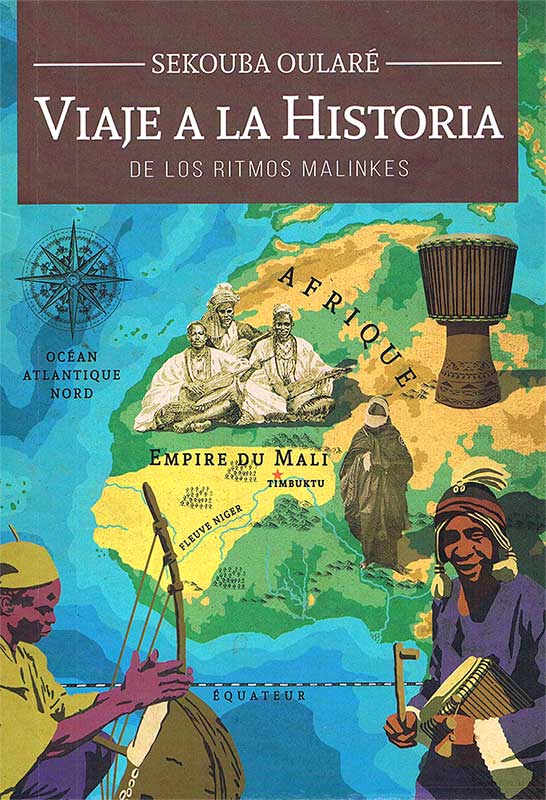
Most of this information was given by Billy Konate and Sekouba Oulare. You can find more details in Sekouba’s book “Viaje a la historia de los ritmos malinkes” (Sube La Marea editions, 2022).
BASIC PATTERNS
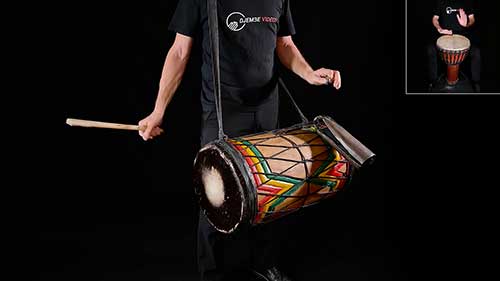
Sangban
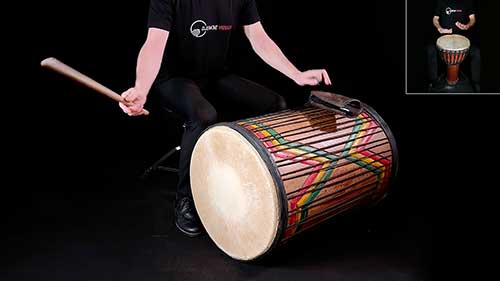
Dununba (2)
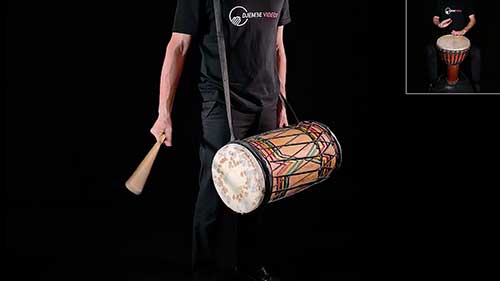
Kensedeni (2)
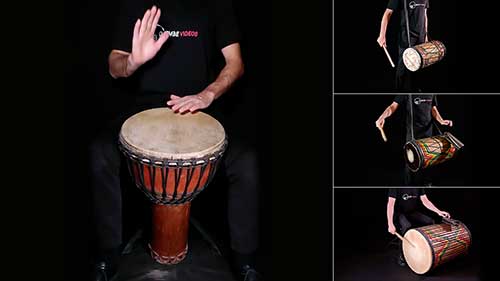
Djembé (3)
LOOPS
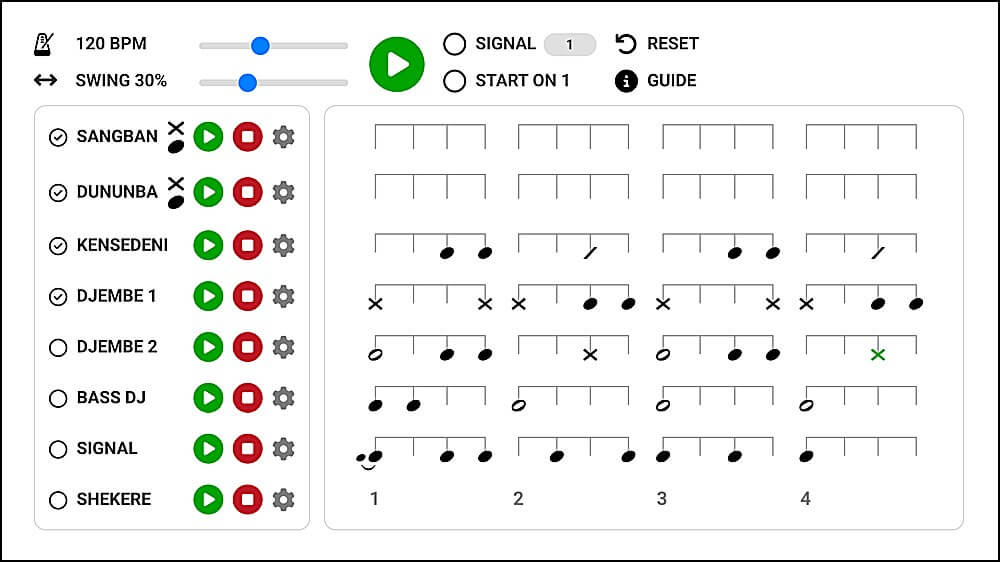
VARIATIONS
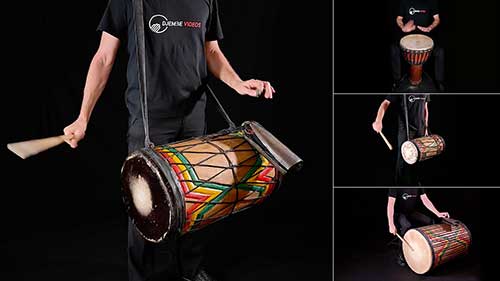
Sangban (3)
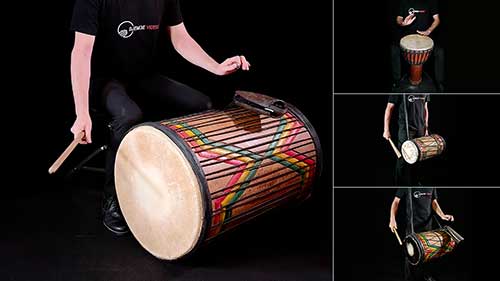
Dununba (8)
CHAUFFES
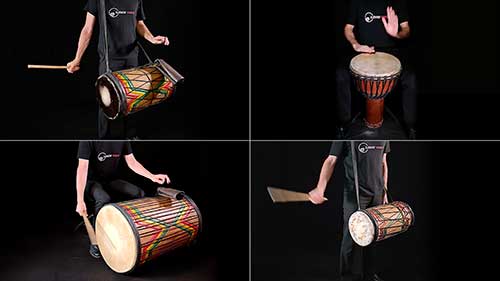
Dununs
BONUS
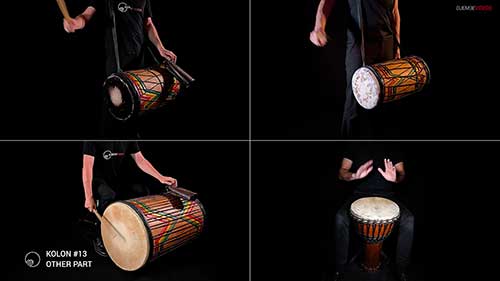
Other part
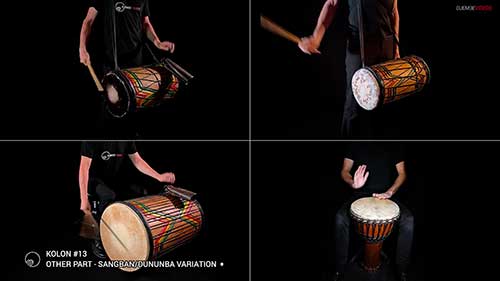
Sangban/dununba variation