
KAWA (HAMANAH VERSION)
The Kawa rhythm comes from Faranah, a village in the Sankaran region.
The first mask to take care of the people was the Saw, with a masculine and protective spirit. After the Saw came the Soliwulen. These two male masks have a bond of brotherhood and also a protective function. The third mask is the female-spirited Kawa, who added a more complex dance to her manifestation.
According to Fadouba Oularé, the Soliwulen form a couple with Kawa.
The two founding families of Kawa, Boumbouran Lenke Dunno and Biliba Yose Keira, relate that Kawa is a spirit that emerged for a great warrior named Fakoli. Fakoli is well known because apart from being very strong, he fought alongside Soundiata Keïta in the Battle of Kirina against King Soumaoro Kante. The spirit of Kawa then came to accompany this great warrior, take care of him and help him fight his enemies.
Read more
The first Kawa mask was made by Boumbouran Lenke Dunno, who was a descendant of the Fakoli family.
Among the elements that accompany Kawa’s mask we can see those he carries in his hands, the Lankama, which is used to strike his enemies, and the Kossi which he uses to dance and which can also contain grigri.
Kawa protects the land, people, cultures, travel, trade, luck. He monitors, controls everything and helps everyone.
In Guinea, a sorcerer can “take your luck” and thus make you unhappy. The Kawa can intervene in this case without asking for a reward. But he can also do harm, and that harm is incurable.
When he dances, if you want to pass by, you have to bow your hands behind your back, which means: “I do not compare myself to you, I am inferior, I respect you, I come to you because I admire you in the circle of dancers.”
If the Kawa puts his hand on the head of a dancer, this one is blessed for all his life and becomes invulnerable.
The Kawa warns wrongdoers, he knows them in his community, and if they don’t stop, then Kawa will harm them.
The Kawa is a village habitant known to everyone, but during the traditional festival, when he has all his attributes, his vision is more enlightened and deeper: he sees everything. At the village level, he is the highest.
We also take out the Kawa Mask traditionally to ensure the protection of the Soli (circumcision ceremony for boys) which can then take place in peace, since the Kawa mask repels sorcerers and evil spirits. The Kawa guards and protects the children.
Kawa is a mask dance, so only initiates can dance it. The mask is worn by a master witch doctor who has a special power. He must know the plants very well as well as the secrets of the day and the night.
The witch doctors, thanks to the power of their magic, protect against diseases, evil spirits and malicious people.
BASSITI
Among the Malinké of Upper Guinea, Bassiti are sorcerers and traditional healers—known in French as “féticheurs”.
Bassiti possess deep spiritual knowledge and the ability to communicate with spirits—both ancestral and tutelary. They perform rituals, provide physical and spiritual healing, and offer guidance to their communities. They are also the guardians of sacred places such as ponds, forests, and ancestral groves.
They work with herbal remedies, ritual objects (amulets, fetishes, staffs, and other sacred instruments), and ceremonies intended to protect the community from harmful entities—whether malevolent spirits or wicked sorcerers.
Bassiti occupy an ambivalent position in Malinké society: they are respected for their protective and healing powers, yet sometimes feared or stigmatized, suspected of witchcraft or of wielding political and social influence through occult means.
During public celebrations—such as processions to sacred ponds, great mask festivals, or Dununba festivals—Bassiti take part to bless the gathering, summon the spirits, and ensure the ritual purity of the site. They are believed to detect malevolent individuals, whom they symbolically strike and drive away from the assembled crowd.
Each “féticheur” has his own rhythm and ceremony, usually performed late at night. Among the principal ritual masks are Djina Mansa, Kawa, Koma, Nama, Nyaba, Soliwulen, Woïma, and Wulujeng.
Among them, Koma is regarded as “the greatest”, “the master of fetishes”—the most powerful of all.
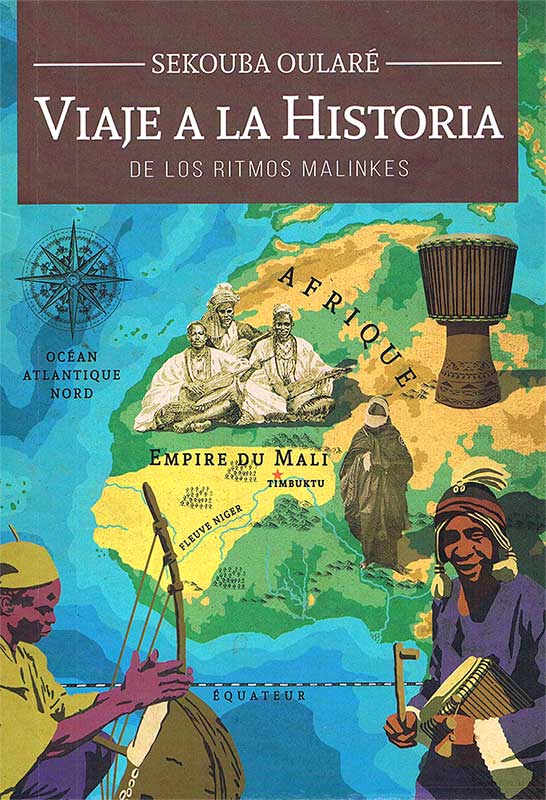
Most of this information was told to Jeremy Tomasck by Sekouba Oularé during many conversations. You can find more details in his book “Viaje a la historia de los ritmos malinkes” (Sube La Marea editions, 2022).
BASIC PATTERNS
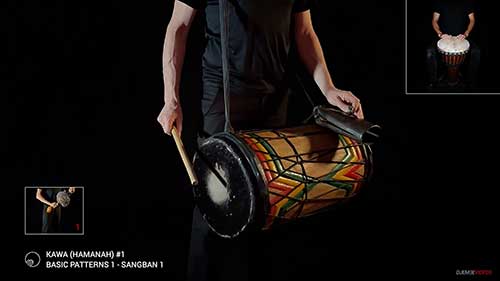
Basic patterns 1
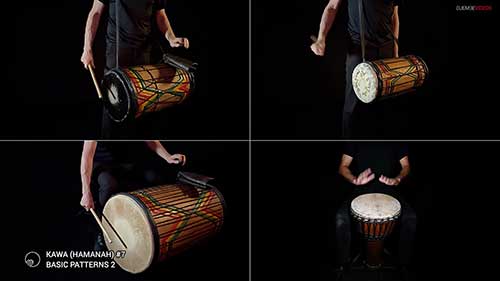
Basic patterns 2
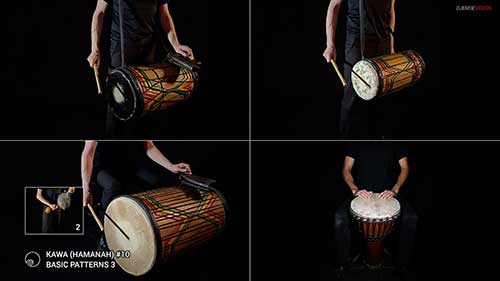
Basic patterns 3
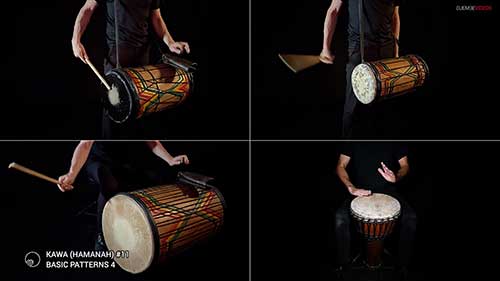
Basic patterns 4

Basic patterns 5
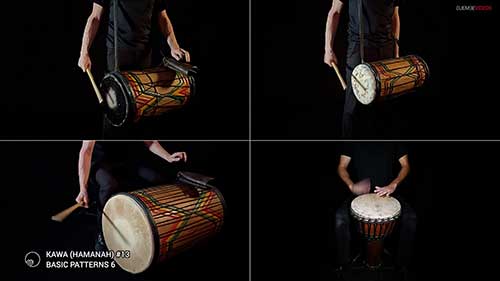
Basic patterns 6
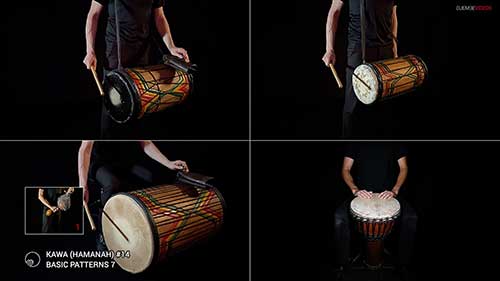
Basic patterns 7
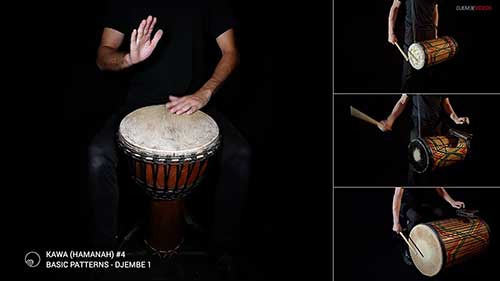
Djembé (4)
LOOPS
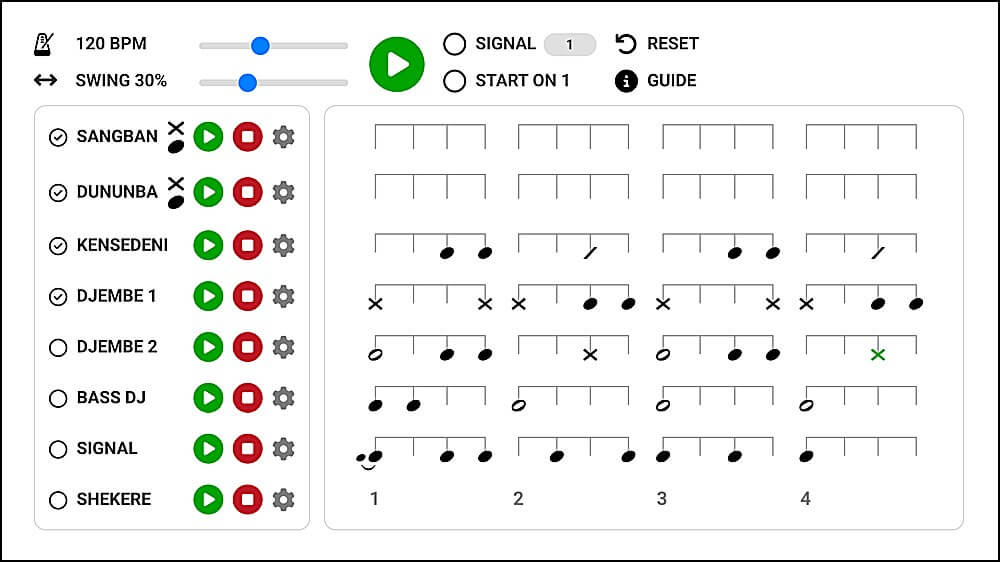
VARIATIONS
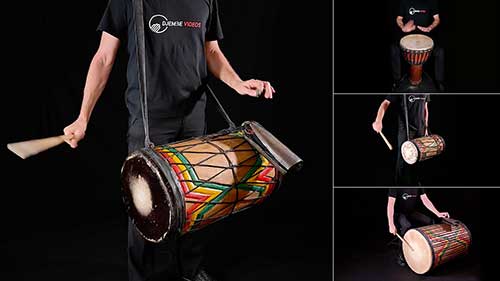
Sangban (28)
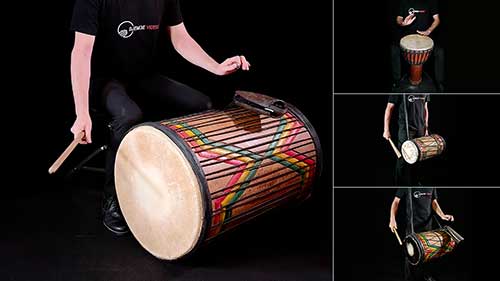
Dununba (9)
DJEMBE SOLOS
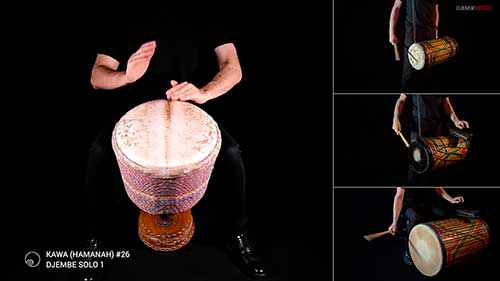
Level 1 (1)
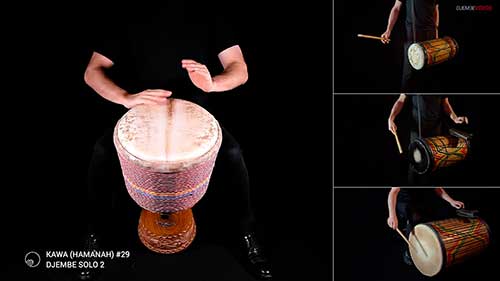
Level 2 (2)
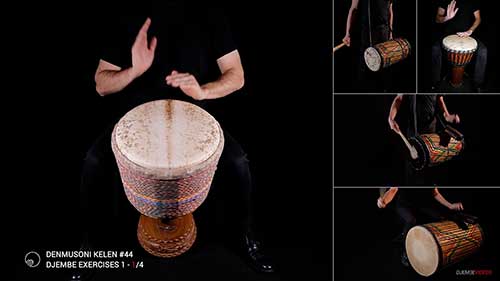
Exercises (6)