
SOLIWULEN (FARANAH)
This is the version played in Faranah, in the Sankaran region, which is quite different from the one played in the Hamanah/Gberedu region.
SOLIWULEN
The rhythm Soliwulen comes from Sadakoroni, a village close to Baro. Soli means panther and wulen is the color red. The clothes which are worn with the Soliwulen mask are predominantly red to reflect this. The Soliwulen is a “féticheur”(French for spiritual healer). He wears bells on his feet and holds weapons in the form of a spear and a staff in his hands. In his dance, he imitates the panther, observing people closely.
Read more
He is covered with mirrors and protective amulets, which reflect negative energy from people and evil spirits. He has the power to detect bad individuals, towards whom he is aggressive. He is frightening, but people love him because he protects the villages, identifies and repels evil spirits, and provides healing thanks to his knowledge of medicinal plants.
He protects young uninitiated boys (Bilakoro) and girls, especially during important rituals and ceremonies.
The song says that Soliwulen does not provoke, but that it is the people who provoke him.
Soliwulen appears during the Soliba to protect the Bilakoro and the participants. After the Soliba, he also cleanses the village of evil spirits. He also intervenes to heal when someone has been made ill by evil spirits.
Only an initiated féticheur may own and wear this mask, and he must make it himself. After his death, the mask is burned and no one else is allowed to use it.
In the Sankaran region, the first sacred mask was Saw. The second mask from the region is Soliwulen. Unlike Saw, Soliwulen is known for dance.
Soliwulen is one of the Suba (sorcerers), believed to be capable of leaving their body to transform into an animal or another being. He also protects the villagers from evil sorcerers who can transform at night and eat humans.
Unlike the Suba, the Bassiti (fetishists) do not transform. They also work with “grigris” to learn the wisdom of trees and medicinal plants. They too are believed to hold the ability to bond with spirits.
BASSITI
Among the Malinké of Upper Guinea, Bassiti are sorcerers and traditional healers—known in French as “féticheurs”.
Bassiti possess deep spiritual knowledge and the ability to communicate with spirits—both ancestral and tutelary. They perform rituals, provide physical and spiritual healing, and offer guidance to their communities. They are also the guardians of sacred places such as ponds, forests, and ancestral groves.
They work with herbal remedies, ritual objects (amulets, fetishes, staffs, and other sacred instruments), and ceremonies intended to protect the community from harmful entities—whether malevolent spirits or wicked sorcerers.
Bassiti occupy an ambivalent position in Malinké society: they are respected for their protective and healing powers, yet sometimes feared or stigmatized, suspected of witchcraft or of wielding political and social influence through occult means.
During public celebrations—such as processions to sacred ponds, great mask festivals, or Dununba festivals—Bassiti take part to bless the gathering, summon the spirits, and ensure the ritual purity of the site. They are believed to detect malevolent individuals, whom they symbolically strike and drive away from the assembled crowd.
Each “féticheur” has his own rhythm and ceremony, usually performed late at night. Among the principal ritual masks are Djina Mansa, Kawa, Koma, Nama, Nyaba, Soliwulen, Woïma, and Wulujeng.
Among them, Koma is regarded as “the greatest”, “the master of fetishes”—the most powerful of all.
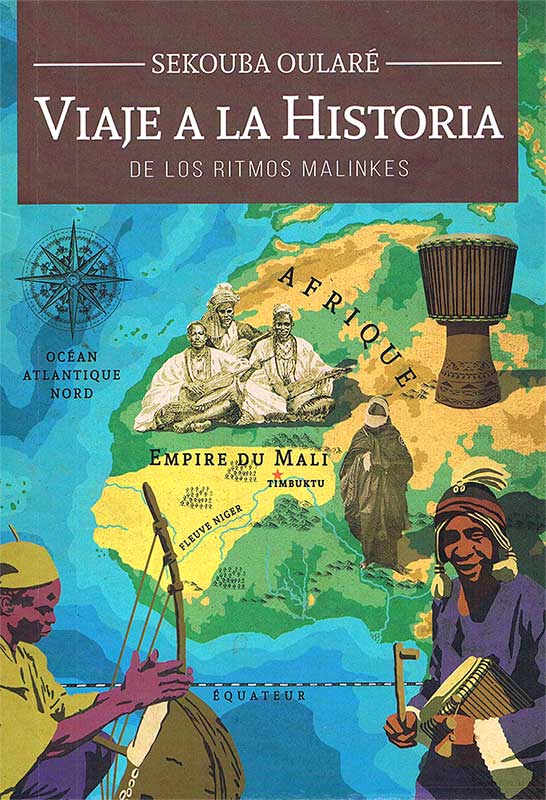
Most of this information was told to Jeremy Tomasck by Sekouba Oularé during many conversations. You can find more details in his book “Viaje a la historia de los ritmos malinkes” (Sube La Marea editions, 2022).
BASIC PATTERNS
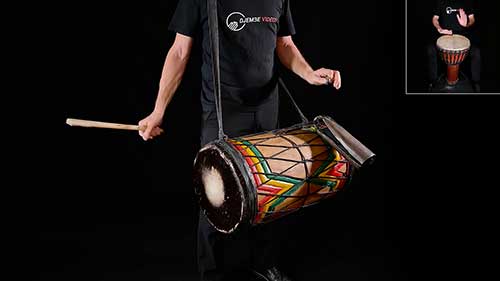
Sangban
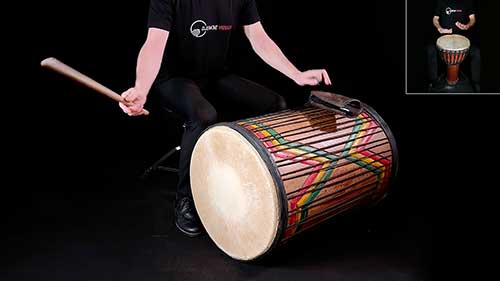
Dununba
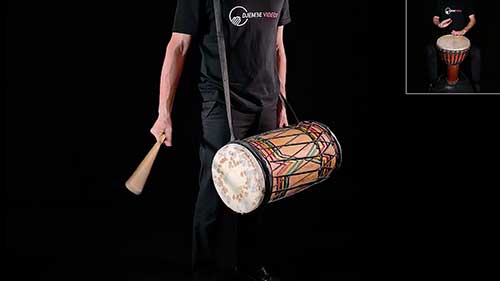
Kensedeni
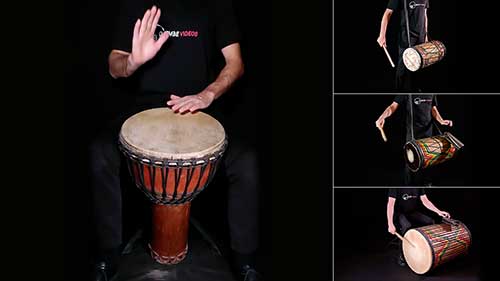
Djembé (5)
LOOPS
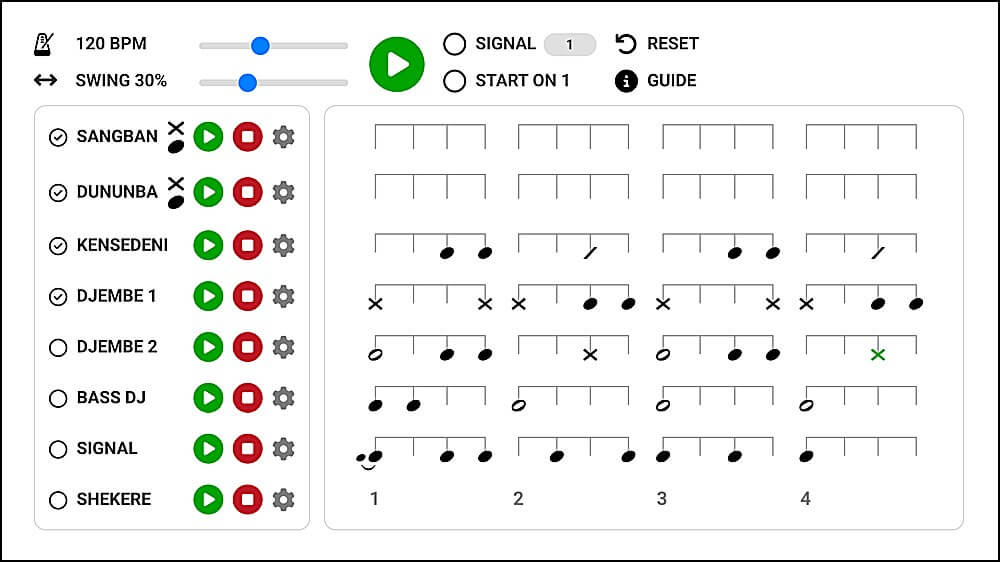
VARIATIONS
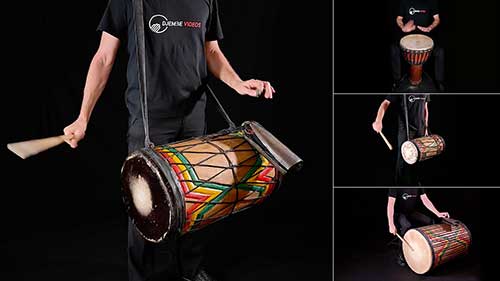
Sangban (7)
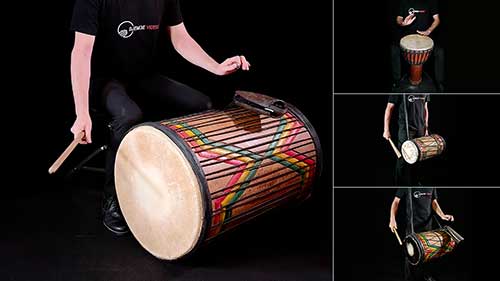
Dununba (12)
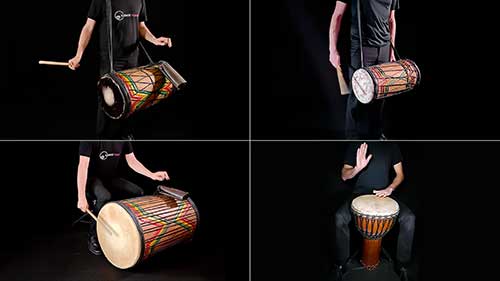
Sangban/Dununba
CHAUFFES
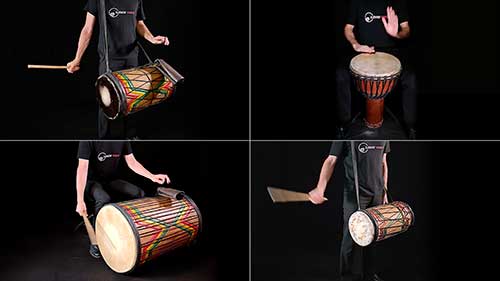
Dununs (2)
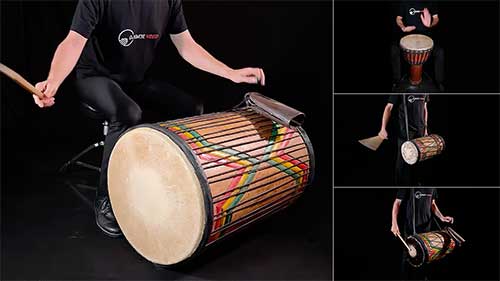
Dununba (4)
DJEMBE SOLOS
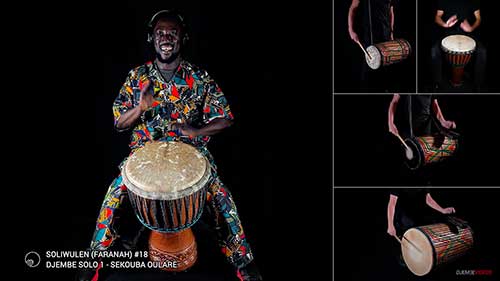
Level 1
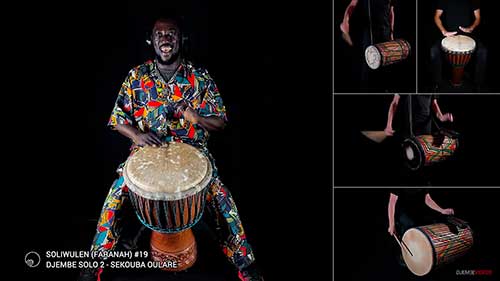
Level 2
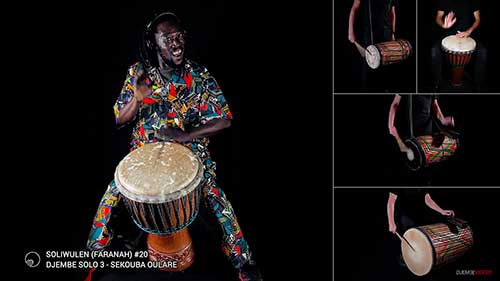
Level 3