
TASABA
The Tasaba mask and the rhythms that accompany it originate from Wala Wala. This is why the Wala Wala rhythm is often played for the Tasaba mask as well. The dancers created this female mask so that they would no longer have to disguise themselves as women, as they traditionally do in Wala Wala.
In Malinké, Tasa means “bowl” and Ba means “big.” Thus, Tasaba literally means “big buttocks.” The dancer wearing the mask performs contortions and makes funny faces to humorously imitate women whose buttocks grow larger after marriage and childbirth. This is, of course, done playfully — to entertain and amuse the women.
The appearance of the mask varies from village to village, with different colors used. The dancer’s costume is padded at the hips and buttocks to make them appear more prominent. In Sangbaralla, there are two versions of the Tasaba mask: the men’s Tasaba, which is black and decorated with cowries, and the women’s Tasaba, which is yellow or white.
BASIC PATTERNS
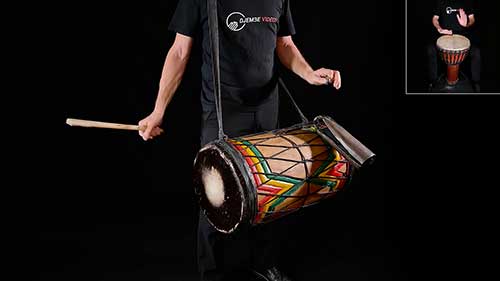
Sangban (8)
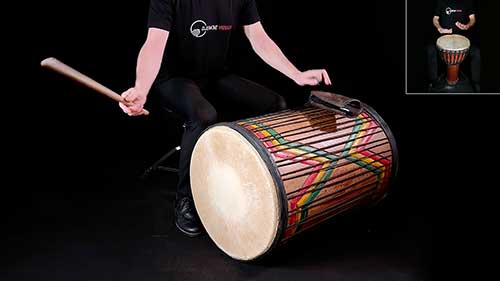
Dununba (6)
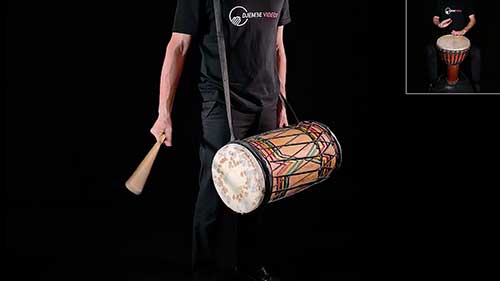
Kensedeni (3)
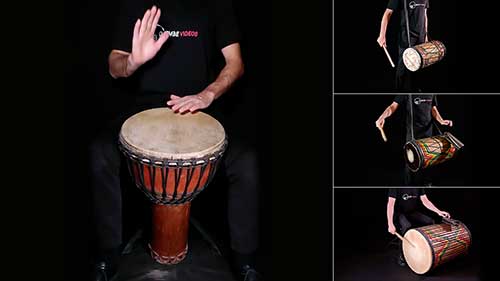
Djembe (3)
VARIATIONS
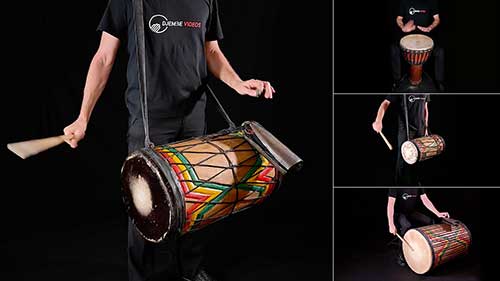
Sangban (9)
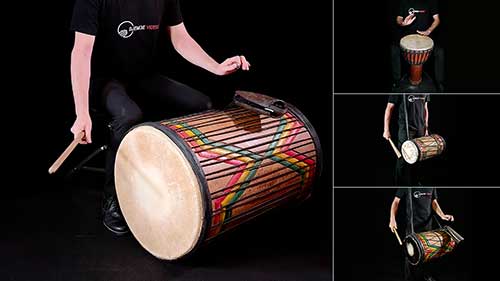
Dununba (3)
CHAUFFES
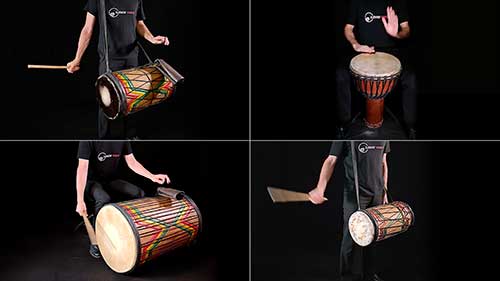
Dununs (2)