
NAMA (BINARY)
Nama is a powerful fetish within the Malinke initiation society. Its primary role is to protect the village, as well as to identify and eliminate malevolent spirits.
Nama represents a force of justice and spiritual authority. It is deeply feared and respected for its ability to maintain balance and order within the community.
In the Malinke tradition, Nama is considered one of the most feared fetishes. During mystical ceremonies, its mask follows a unique rule: it always enters from the left side, unlike other masks.
Read more
The Nama mask is characterized by a large, imposing structure covered in bright red fabric, giving it a powerful and intense presence. On the head, the mask features multiple long, curved horns that extend outward in all directions, enhancing its intimidating and supernatural appearance. Around the structure, colorful elements such as cords, mirrors, small ornaments, and symbolic decorations are attached. Long raffia fringes are attached at mid-height, unfolding when the mask spins rapidly on itself.
The face area is often stylized and abstract, with geometric patterns, mirrors, and symbolic features rather than realistic human traits. This reinforces the idea that the mask does not represent a person, but a spiritual entity.
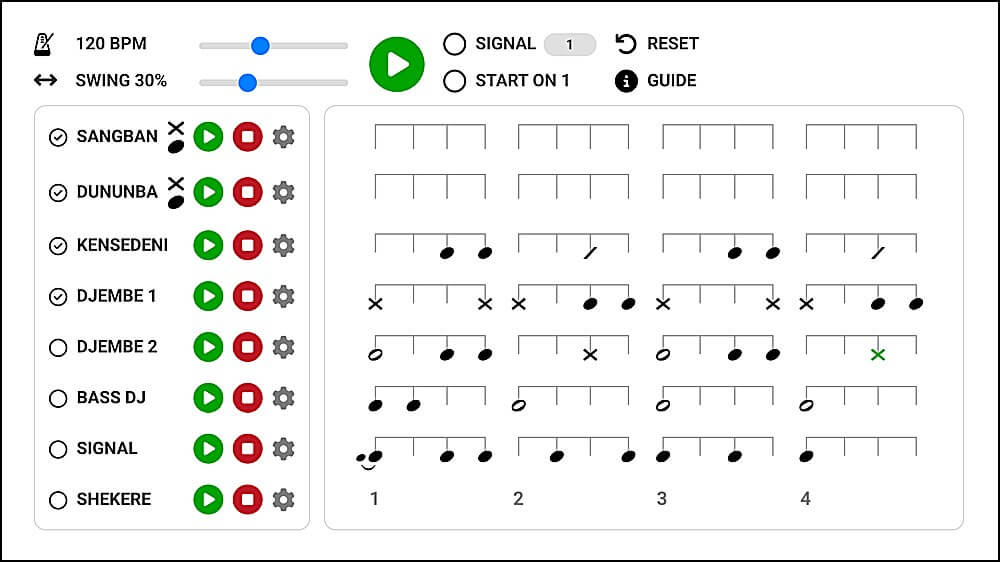
Several rhythms are dedicated to Nama, and the version presented here is binary.
BASSITI
Among the Malinké of Upper Guinea, Bassiti are sorcerers and traditional healers—known in French as “féticheurs”.
Bassiti possess deep spiritual knowledge and the ability to communicate with spirits—both ancestral and tutelary. They perform rituals, provide physical and spiritual healing, and offer guidance to their communities. They are also the guardians of sacred places such as ponds, forests, and ancestral groves.
They work with herbal remedies, ritual objects (amulets, fetishes, staffs, and other sacred instruments), and ceremonies intended to protect the community from harmful entities—whether malevolent spirits or wicked sorcerers.
Bassiti occupy an ambivalent position in Malinké society: they are respected for their protective and healing powers, yet sometimes feared or stigmatized, suspected of witchcraft or of wielding political and social influence through occult means.
During public celebrations—such as processions to sacred ponds, great mask festivals, or Dununba festivals—Bassiti take part to bless the gathering, summon the spirits, and ensure the ritual purity of the site. They are believed to detect malevolent individuals, whom they symbolically strike and drive away from the assembled crowd.
Each “féticheur” has his own rhythm and ceremony, usually performed late at night. Among the principal ritual masks are Djina Mansa, Kawa, Koma, Nama, Nyaba, Soliwulen, Woïma, and Wulujeng.
Among them, Koma is regarded as “the greatest”, “the master of fetishes”—the most powerful of all.
Most of this information was shared with Thomas Fallet by Mory Bayo, during many conversations.
BASIC PATTERNS
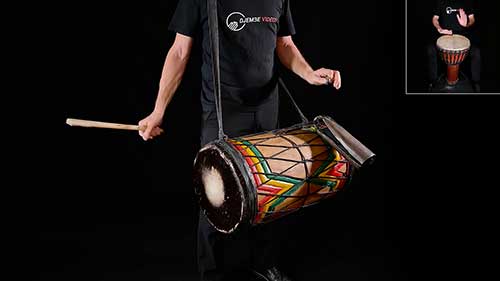
Sangban
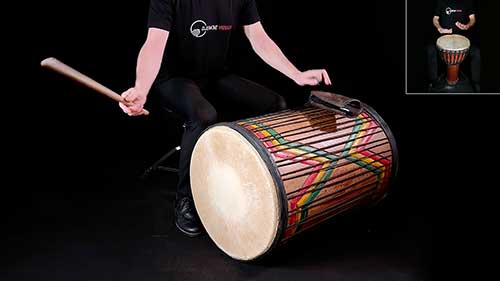
Dununba
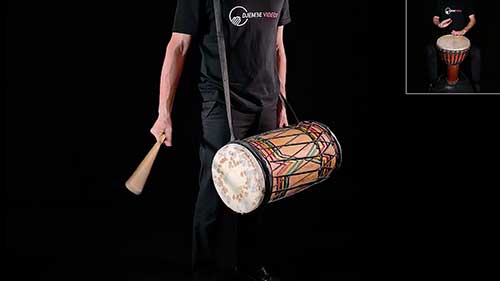
Kensedeni
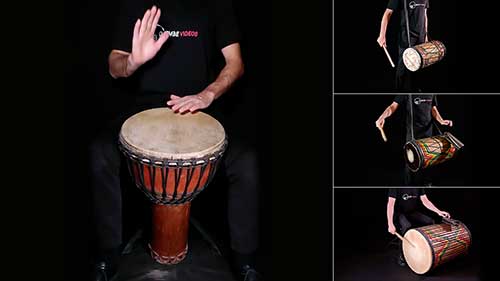
Djembe (3)
LOOPS
VARIATIONS
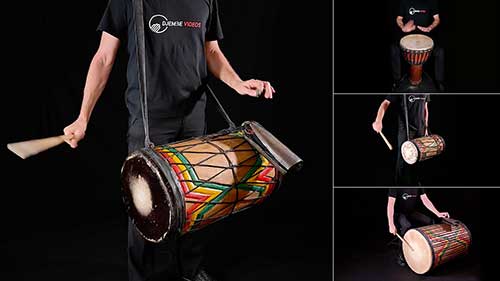
Sangban (8)
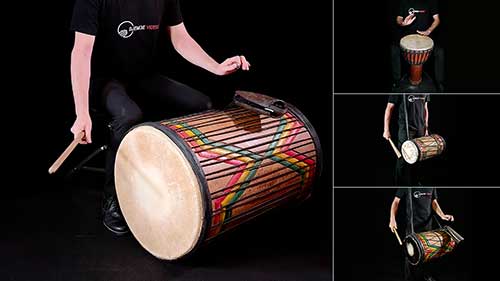
Dununba (16)
CHAUFFES
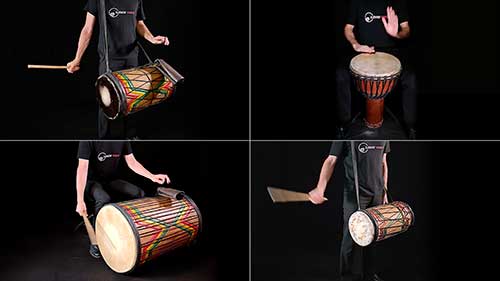
Dununs