
SOKO
Sökö is from the village of Faranah, located in the Sankaran region of Upper Guinea. Sökö is the evolution of a rhythm of the Djalonke ethnic group, modified by the Malinke ethnic group. The original Sökö was called Bakutuna. In the Djalonke ethnic group, the word Sökö means “uncle”.
In 1950/1951, the great djembefola Fadouba Oularé changed the sangban pattern of the Bakutuna rhythm, creating the Sökö now widely used. He created a third version in 1956, Sökö Bambulan. The name comes from a metaphor linked to bamboo and in reference to a particularly talented and elegant dancer. His companion sang for him, and Sökö Bamboulan is always played, honouring the memory of this dancer.
Sökö is closely related to the Soli ceremony, an important part of the initiation of young boys. The stages include –
1. Sökö, the announcement of the Bilakoro to their uncles:
In preparation for the Solissi festival, the Bilakoro (uncircumcised children) warn each of their uncles of the holding of the ceremony, and the approach of their retirement, by dancing Sökö. These parents may live in the same village as the children, or in surrounding villages.
Read more
In order for the Soli celebrations to run smoothly, the uncles support their sisters (mothers of the Bilakoro), by contributing financially and providing food, giving them an important role in the ceremony.
Each Sökö ceremony ends with Sökö Laban, “the last Sökö” in Malinke.
In conversations with Sekouba Oularé, he confirmed that term Sökö Laban does not refer to a specific rhythm. He said “My father Fadouba, who loved Sökö passionately and was the specialist in it, never played any other Sökö than Bakutuna, Bamboulan or Sökö at the end of the Sökö ceremonies; these are the three rhythmic forms he played.”
It is believed that the Sökö Laban rhythm seems to be a creation of the great Bolokada Conde. We look forward to confirming this, and many other details, with him in due course.
After the stage in Sökö Laban, the Bilakoro return together to their village, where their retreat in the Marabon (nursing home) will soon begin.
2. Marabonassi: Education and initiation of bilakoro (cf. Soli)
3. Solissi: Ceremony of Soli (cf. Soli)
4. Dankun: Stage of circumcision (cf. Soli)
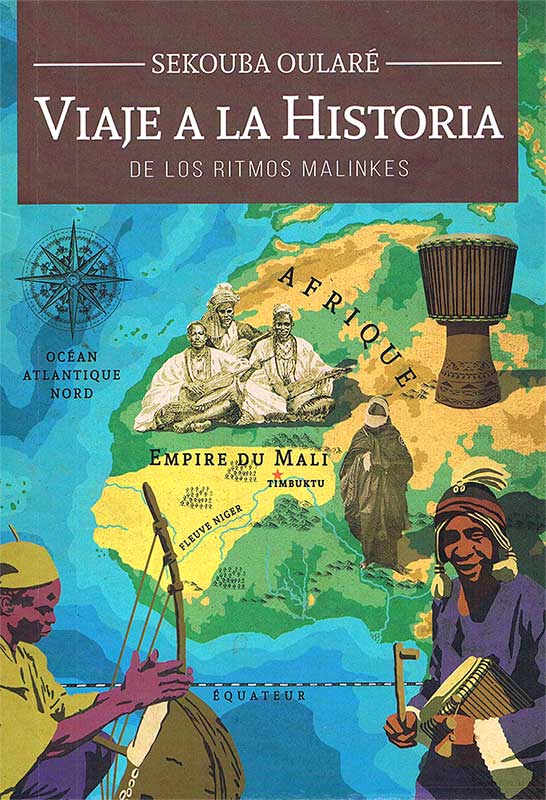
Most of this information was told to Jeremy Tomasck by Sekouba Oularé during many conversations. You can find more details in his book “Viaje a la historia de los ritmos malinkes” (Sube La Marea editions, 2022).
BASIC PATTERNS
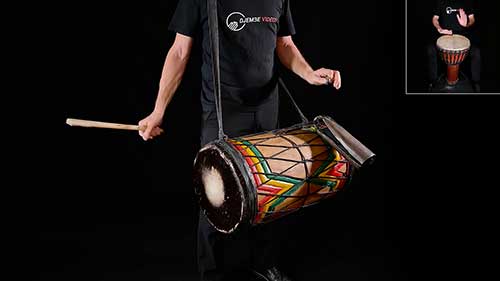
Sangban (4)
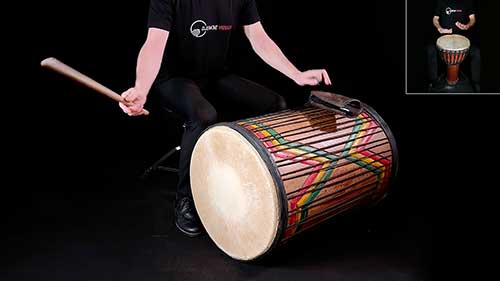
Dununba (3)
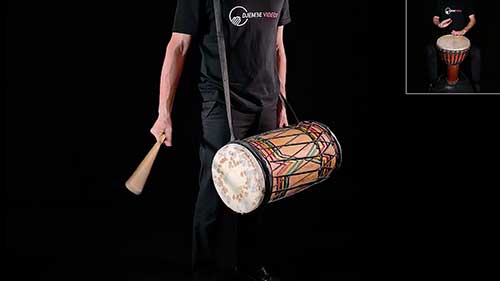
Kensedeni (2)
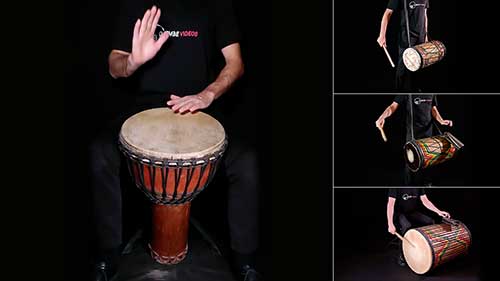
Djembé (6)
LOOPS
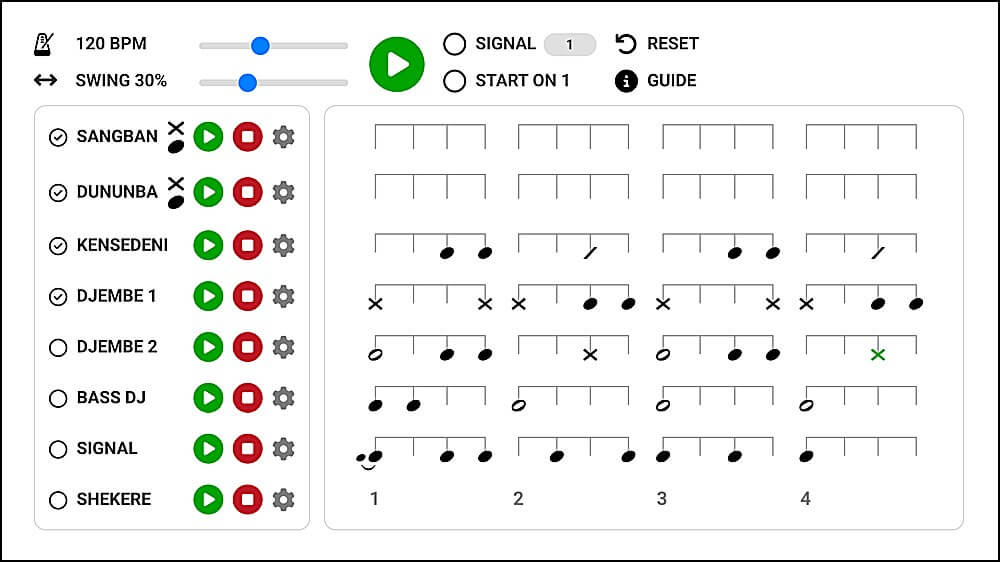
VARIATIONS
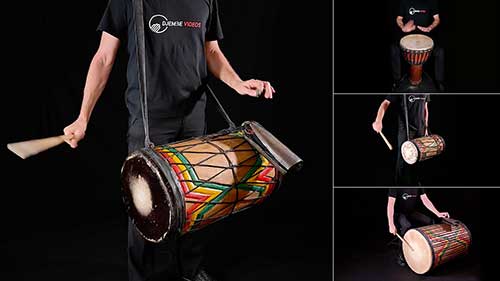
Sangban (62)
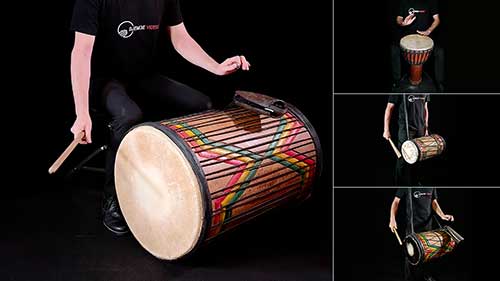
Dununba (66)
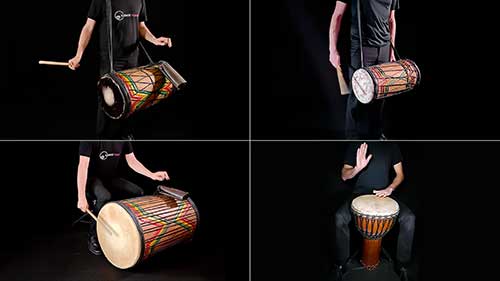
Sangban/dununba (14)
CHAUFFES
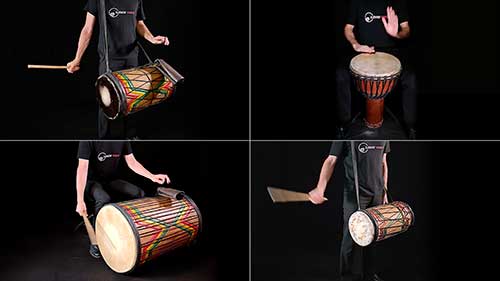
Dununs (7)
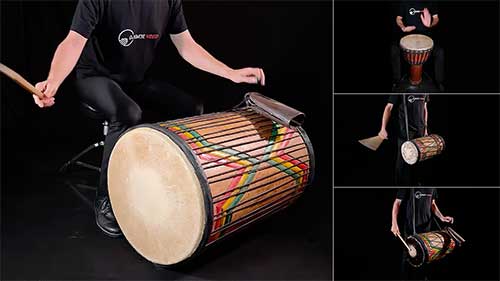
Dununba (5)
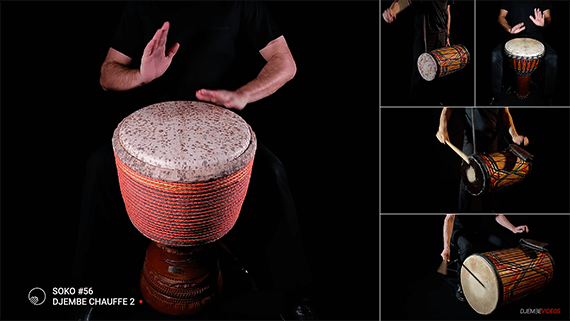
Djembé (6)
DJEMBE SOLOS
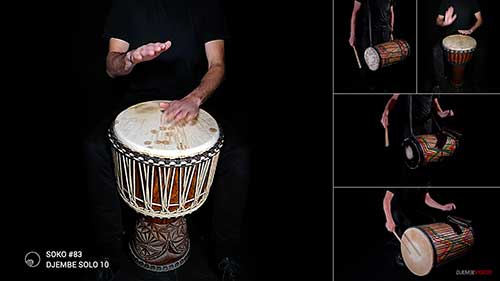
Beginner (1)
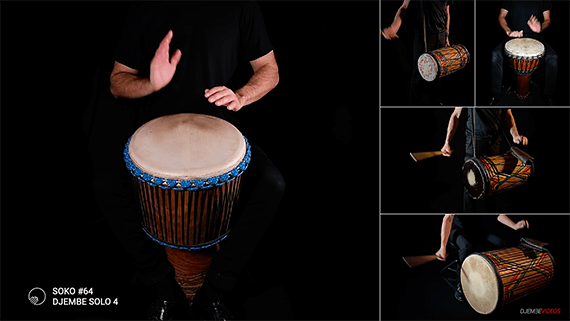
Level 2 (5)
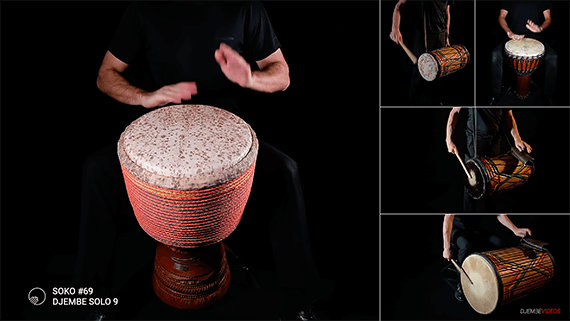
Level 3 (4)
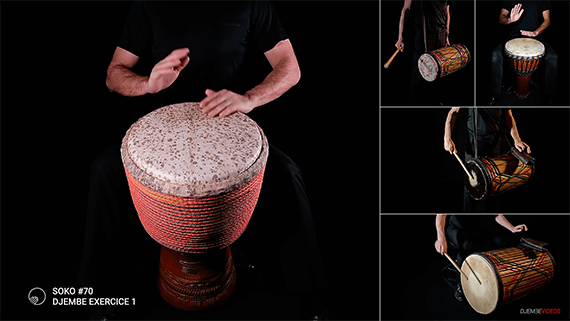
Exercises (12)
BONUS
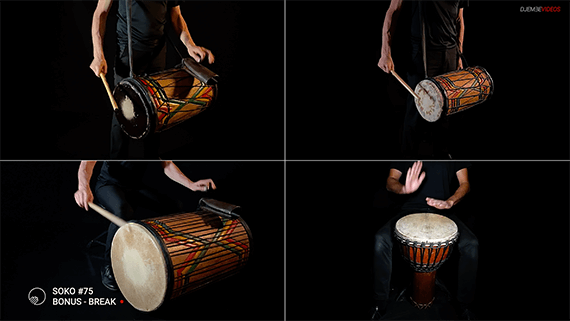
Break