
NUMUN
In Malinke, a blacksmith is called a “Numun,” and the term “Numuya” refers to “the art of the blacksmith.” Rhythms associated with their world are sometimes called “Numunka Bolo,” literally meaning “the rhythm of the blacksmiths.”
Blacksmiths hold a central place in Manding society, culture, spirituality, and history.
The Numun were not originally considered an ethnic group, but rather a profession passed down from generation to generation within specialized families. They are regarded as masters of iron and fire, guardians of ancient knowledge combining craftsmanship, spirituality, symbolic power, and cultural transmission.
The Numun are masters of iron and fire. They work with metal, wood, and materials connected to ritual practices. They are divided into several specialized groups: the numun fing, the siaki, and the kulé. The women of the numun fing traditionally make pottery.
Read more
The Numun produce weapons used for hunting and defense, hoes, hatchets, agricultural tools, furniture, ritual masks, and traditional percussion instruments.
Traditionally, the tools made by blacksmiths were not paid for with money. Instead, each tool was rewarded with a measure of rice.
The Numun are also considered guardians of traditional knowledge and oral transmission. Beyond their role as craftsmen, they often serve as mediators within the community, helping to resolve tensions and social conflicts.
Several major families are traditionally associated with blacksmithing and other Manding castes. Among the Numun families are the Kanté, Camara, Kourouma, Ballo, Fané, Diarisso, Dianka, and certain Kourouma lineages.
According to certain Manding traditions, Numuya dates back to the time of the prophet Noah, called “Nouhan.” God is said to have asked Noah to build a pirogue. Noah worked with wood, while his son, the prophet David (“Daouda”), worked with iron and is believed to have invented the “Sulu,” the furnace used in blacksmithing.
The great precursor of blacksmithing is often presented as Soumaoro Kanté. According to some traditions, Fakoly received his knowledge directly from spiritual beings or spirits, although other great traditionalists contest this version.
The stories tell that Soumaoro Kanté was invulnerable. The only thing capable of killing him was the spur of an old rooster. Fakoly, after joining Soundiata Keïta, is said to have used this secret to defeat Soumaoro.
Blacksmiths are believed to maintain a sacred relationship with spiritual beings (“génies”). These spirits are said to reveal themselves only at night, in the bush, and to communicate with certain blacksmiths.
The kola nut plays an important role in these spiritual practices. The spirits are believed to accept its scent while rejecting tobacco and salt. They may take on a human appearance, speak the language of the person they encounter, and establish sacred agreements that must never be broken.
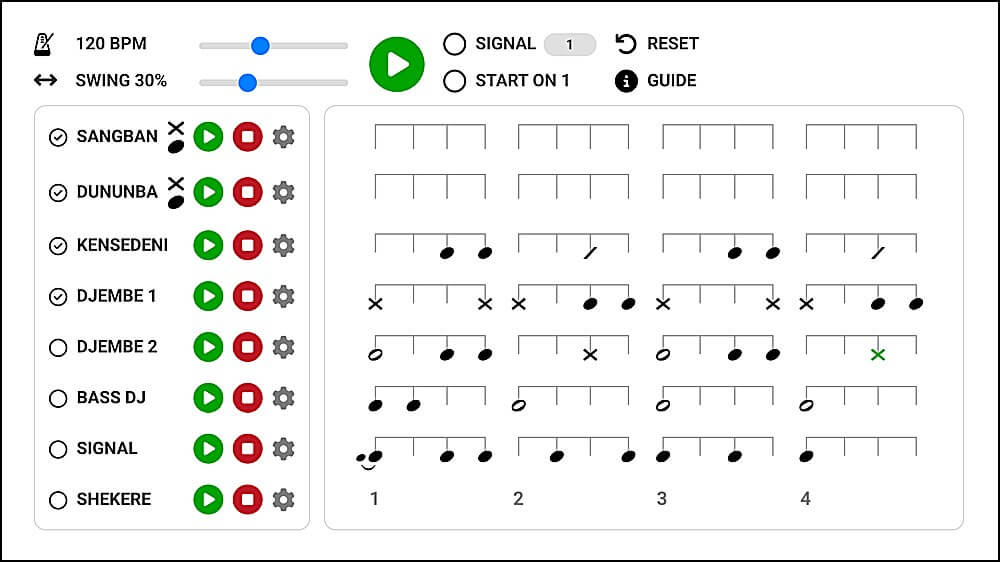
BASIC PATTERNS
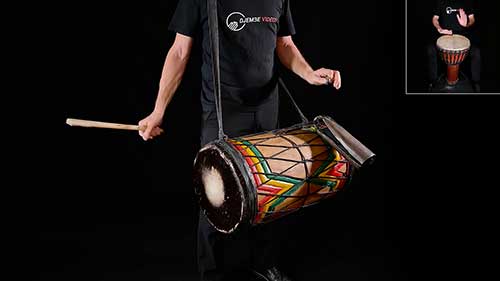
Sangban
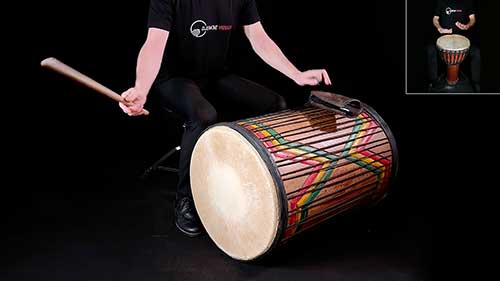
Dununba
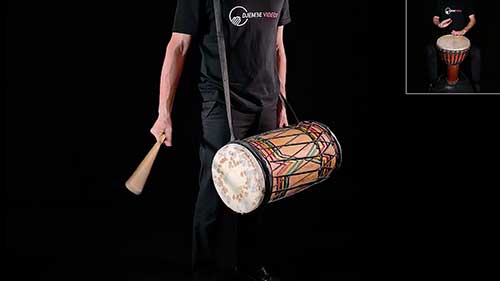
Kensedeni
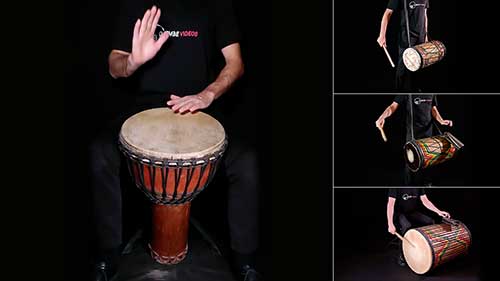
Djembe (3)
LOOPS
VARIATIONS
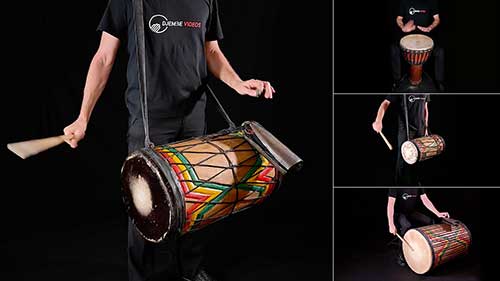
Sangban (12)
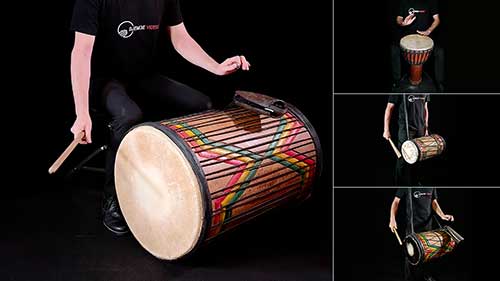
Dununba (33)
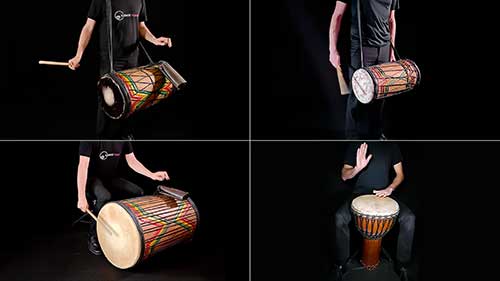
Sangban/Dununba (3)
CHAUFFES
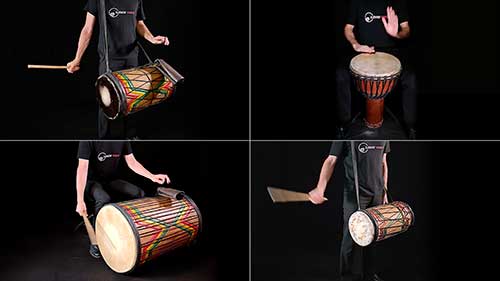
Dununs