
SORO
In the prefecture of Kouroussa, the principal rhythm of the Kassa group is Soro. In the Sankaran region, it bears the name of Kassa Ba, the “Great Kassa”, some refer to as the father and mother of all Kassa rhythms. A working day always starts with Kassa Soro.
Soro is benevolent spirt, as well as a powerfull talisman made from an antelope horn (Kerebudu). The Soro is only given to remarkable male individuals, whether they are farmers, hunters, musicians, or others. The owner of a Soro is called a Soroti. His life is made easier by the talisman, which brings him success in whichever field he specializes in.
Read more
KASSA
Originating in Upper Guinea, especially in the regions of Kouroussa and Sankaran, the Kassa rhythms accompany the different stages of agricultural activity (soil preparation, seeding, harvesting etc.).
Kassa represents, in this context, the act of scraping the earth. The word Kassa means “till the land”. Kassa can also mean 'to scratch oneself' when one has an itch. Kassa refers to the ploughing task which is completed with a hoe called a Dawa or Daba. When a rich man owns a large property and wishes to cultivate his land, he enlists the help of his community. As payment for the assistance, he will offer a cow, goat or a sheep, as well as some money for the workers.
The chief of the village summons the people by the sound of a flute. The villagers are invited to work on the agreed day and, depending on the generations, will fulfill specific, yet varied roles. The dynamic of fieldwork is to advance in rows. The first row opens the way by removing the bushes. Gradually, as each row moves forward, they clear more and more until everything has been removed. Men and children are mixed, while the women traditionally prepare the food and sing.
It is the union of villagers which can allow weeks of work to be completed in a single day. If the work lasts several days and is located away from the village, a camp may be established so that the workers remain on site. And whilst they work a team of musicians and griots of the village accompany the workers to support and encourage them. Neighbouring villages are informed of the event also and by way of support send cola nuts to provide the workers strength. If among them are Konkoba, farmers recognised for their mastery of the art of field work, they are also welcomed and celebrated as fundamental elements of the Kassa.
Kassa is a day of work in the fields, whereas Senèsunian lasts longer—sometimes up to an entire week. The word senè means “field,” and sunian means “thief.”
When young farmers reach working age, they often seek out older landowners who can afford to pay them for their labor. If a farmer is too old to plow his own field, these young cultivators offer their services, in exchange for which the elder agrees to pay them generously—since such older landowners are usually well-off.
The term sunian comes from a playful expression among the Malinké people, who jokingly say that these young Senèsunian “steal the fields” they work on. The irony lies in the fact that although the old farmer hires them to plow his land, he ends up paying them so well that it feels as though his field has been stolen from him!
Around November, when word spreads that a wealthy landowner plans to cultivate a new plot adjacent to one of his fields, some young farmers even go ahead and clear it without asking permission. In doing so, they quite literally “steal the field.” Yet, in the end, the landowner still pays them for their work.
The group of rhythms used is generally called Kassa or Senedunun.
Many Kassa rhythms are played to accompany the work of the community. The principal rhythm in the prefecture of Kouroussa is Soro. In the Sankaran region, it bears the name of Kassa Ba, the “Great Kassa”, some refer to as the father and mother of all Kassa rhythms. A working day always starts with Soro.
In Baro, the other rhythms of the Kassa group are Kodonba, Kondonabendunun, Touradunun (also called Tourafoli or Konkoba), Kondon Kowuli Dunun (Dibon), N'Donasso, and Nköké. Other rhythms, such as Kon, Soli, or Gbada, are also played during Kassa and Senèsunian.
Regarding the rhythms played, in the village of Baro, the workday unfolds as follows:
- Soro in the morning
- Kondonanbendunun to announce the arrival of the big midday meal
- Touradunun or Kon to motivate everyone to return to work
- Kondon Kowuli Dunun (Dibon), played quite slowly, to accompany the resumption of work
- If rain threatens, always arriving from the East, the Kodonba rhythm is played.
- N’Donasso to head back to the village
- Nköké to signal to the inhabitants that the work has been successfully completed
- Various rhythms such as Touradunun, Soro, Soli, etc., so that the young people can dance
- Gbada to finish
It is worth noting that Kassaradonso is a general term used to refer to the various rhythms within the Kassa group as a whole. The word Kassaradonso literally means “Kassa—the work of the fields—has entered the town,” with so meaning “town” or “village.”
At the end of the harvest season, a big party called Kassaladon is organised. The grains are stored in an attic called Bondon or Bilibon.
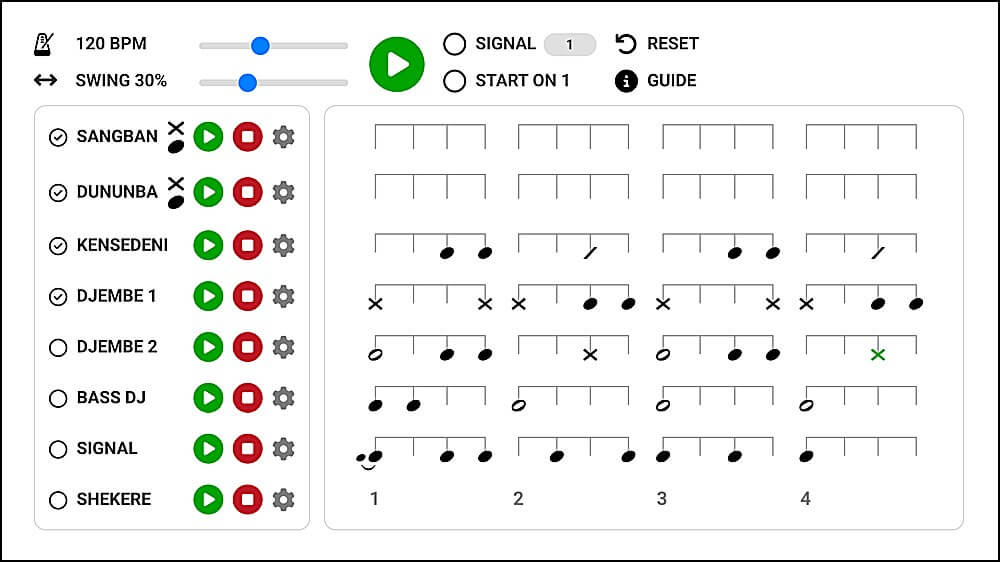
BASIC PATTERNS
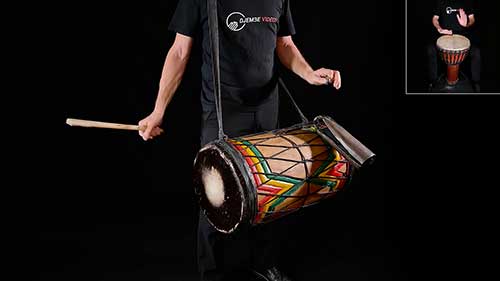
Sangban (2)
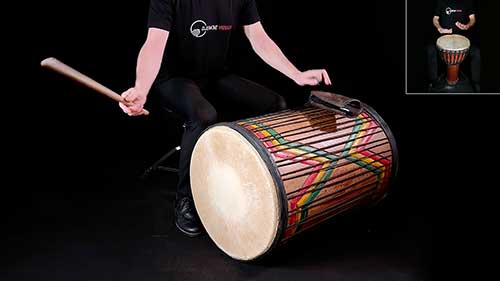
Dununba (7)
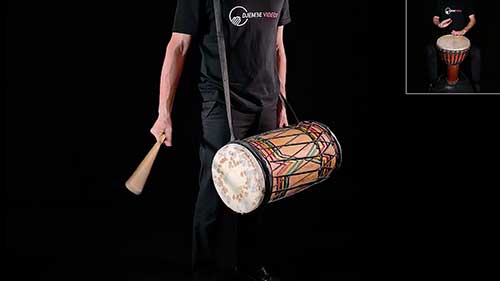
Kensedeni
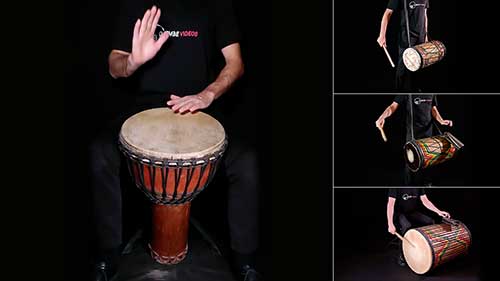
Djembe (3)
LOOPS
VARIATIONS
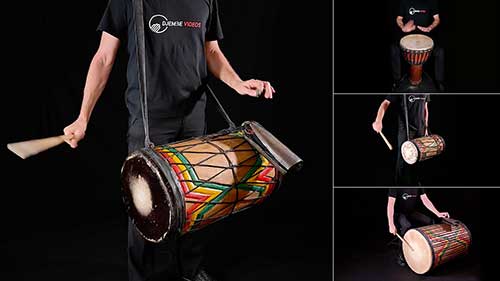
Sangban (54)
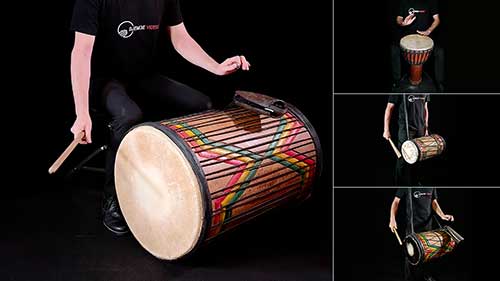
Dununba (100)
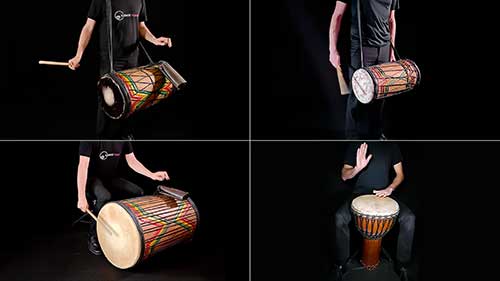
Sangban/Dununba (7)
CHAUFFES
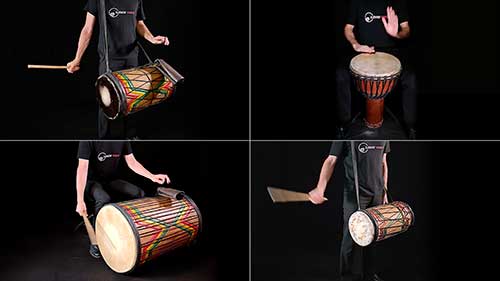
Dununs (9)
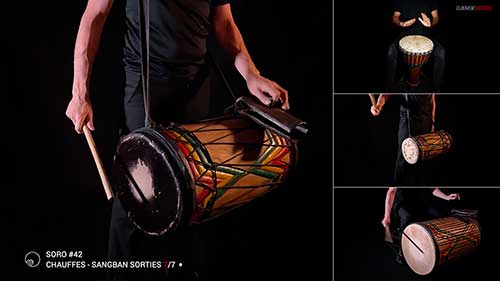
Sangban sorties (7)
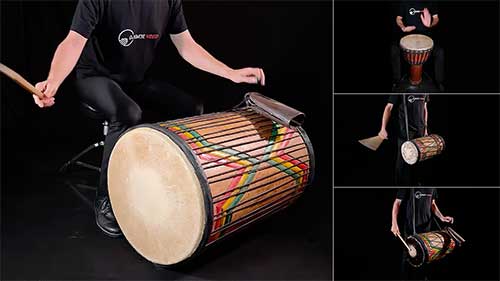
Dununba (6)
DJEMBE SOLOS
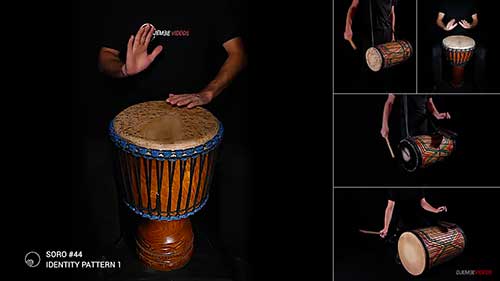
Identity patterns (6)
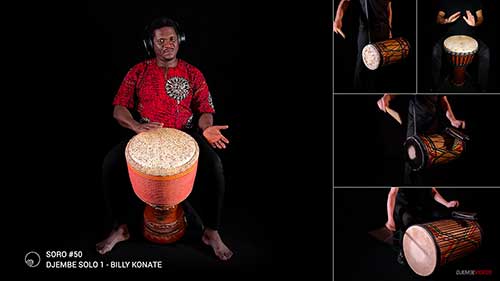
Level 1
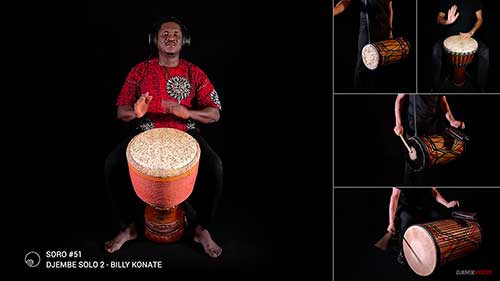
Level 2
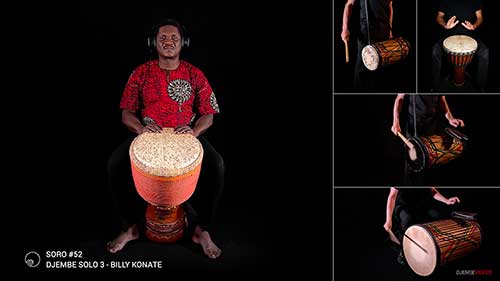
Level 3