
NYABA
Nyaba is both a mask and a ritual rhythm associated with traditional spiritual practitioners (“féticheurs” in French). The name comes from Nya, meaning “eyes,” and Ba, meaning “big”.
It is mainly found in Cisséla, in the prefecture of Dabola (Faranah Region), and in Komola-Koura, in the prefecture of Kouroussa (Kankan Region).
Like Soliwulen and Kawa, among others, Nyaba is tasked with tracking down witches and other “people of the shadows,” as well as malevolent marabouts or ritual practitioners. It also tests the courage of young initiates and helps maintain moral discipline within the village.
This rare and frightening mask is revealed only during ceremonies associated with witchcraft or during major masked celebrations, which usually take place late at night.
Read more
The Nyaba mask represents a horse’s head, with its characteristic ears and a protruding jaw filled with sharp teeth, all painted white. Depending on the village, the mask itself may be red, black, or dark blue. The initiated dancer who wears it may also wear large yellow-and-black socks or leg coverings.
Nyaba’s costume, covered in raffia, is sometimes decorated with mirrors and amulets, further enhancing its terrifying appearance. The fearsome nature of the mask symbolizes its strength and effectiveness in tracking down witches, malevolent marabouts, and harmful ritual practitioners.
Unlike Soliwulen, who is sometimes equipped with a small, extremely sharp spear, Nyaba is generally armed only with a staff, much like Konden. The staff is believed to allow him both to detect witches and to strike them. He may also carry a small hatchet known as a djendé.
Like most Malinke masks, Nyaba is exclusively male and performs alone. His arrival in the village inspires fear, as he is believed to quickly identify malevolent individuals before striking them and driving them away from the crowd gathered for the occasion.
During the daytime, the mask is kept hidden from view inside a hut located near the entrance to the tata, the defensive enclosure wall found around certain villages. These walls are traditionally built from an earthen mixture containing soil, straw, and material from termite mounds, and can sometimes reach a height of four or five meters.
BASIC PATTERNS
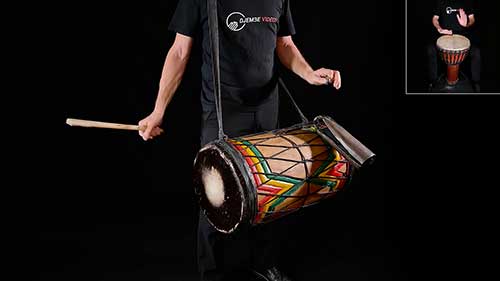
Sangban
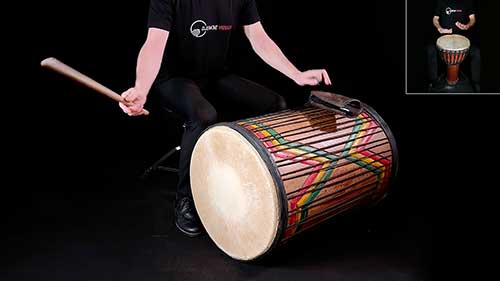
Dununba
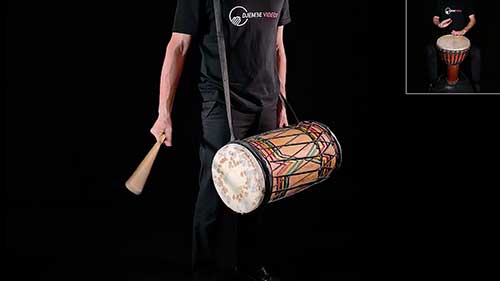
Kensedeni
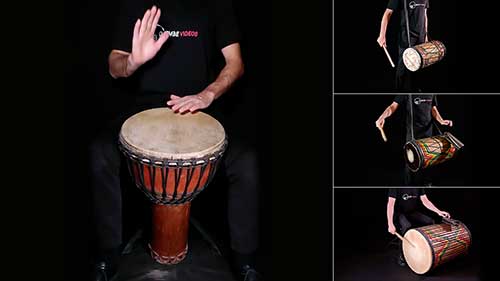
Djembe (3)
LOOPS
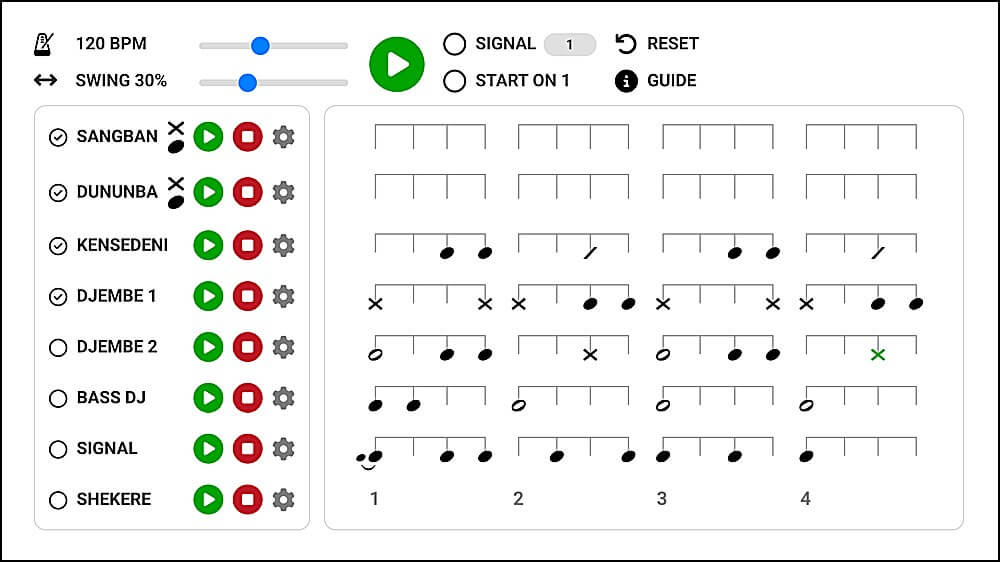
VARIATIONS
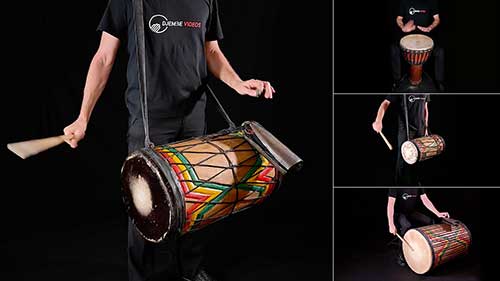
Sangban (6)
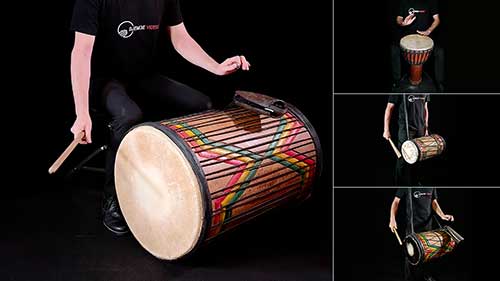
Dununba (6)
CHAUFFES
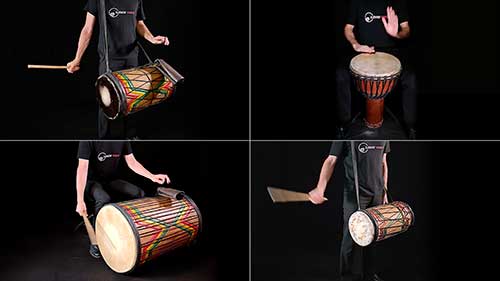
Dununs